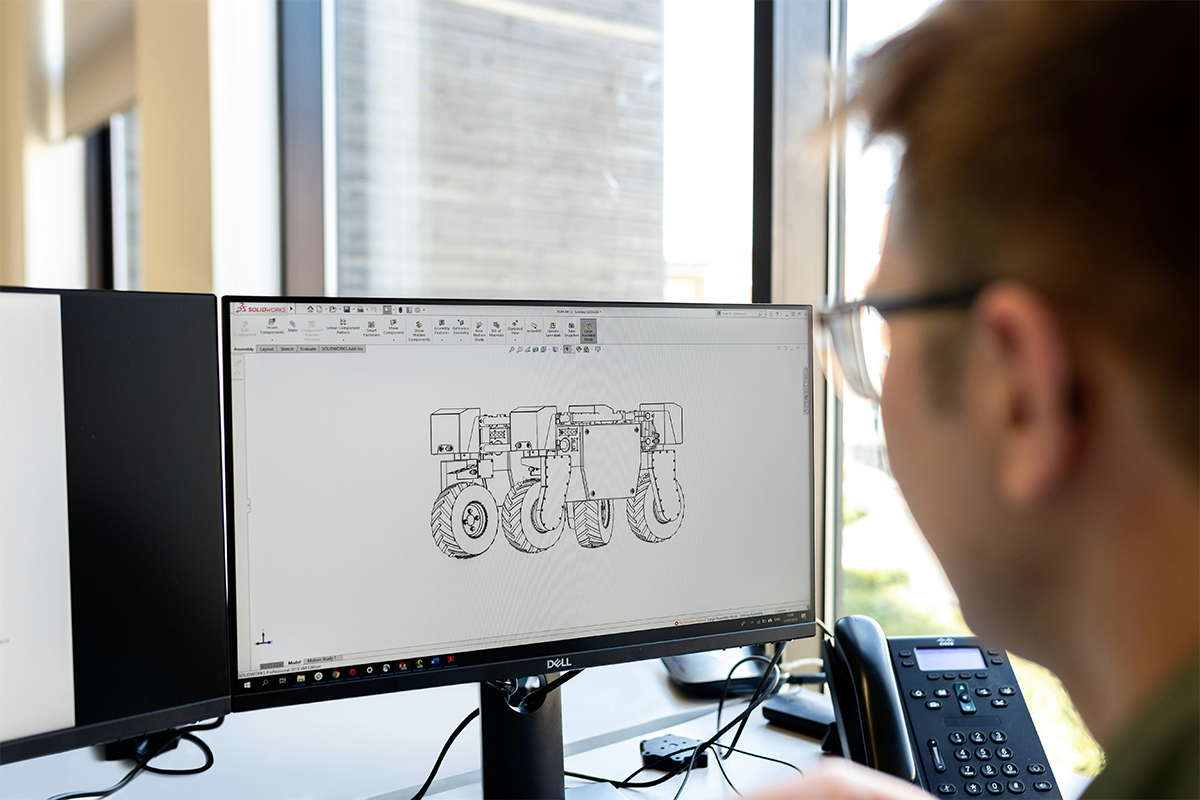
In the machining industry, this scene happens quite often: a mechanical designer stays up for several days, finally completes a drawing, and feels the 3d design is perfect. But when the drawing reaches the workshop, the CNC machinist takes one look and quietly shakes their head.
Why does this happen?
In many cases, it is not that the design is wrong—it is simply a “gap in understanding” between design and manufacturing.
For example, some drawings specify extremely tight tolerances. A normal functional feature may only need ±0.05 mm, but it is marked as ±0.01 mm. To a designer, it is just a small change in a number. But for a CNC machining parts manufacturer, it can mean slower machining speeds, more frequent measurements, and a much higher risk of scrap.
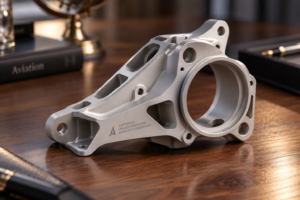
Another common issue is over-optimized geometry. Deep holes, very narrow slots, or sharp internal corners are often easy to create in CAD models, but not so easy in real CNC precision machining parts production. Cutting tools have physical limitations—they need space to enter, enough rigidity to cut, and proper chip evacuation. Otherwise, machining difficulty and cost increase significantly.
Thin-wall structures are another typical problem. Designers often aim to reduce weight and improve aesthetics, especially for industrial automation parts and mechanical arm parts. However, if the wall thickness is too thin, deformation may occur during machining. Even if the program and machine are perfectly fine, the final CNC precision machining parts may still fail to meet dimensional requirements.
Good design is not only about function—it is also about manufacturability. Experienced engineers often ask themselves before releasing a drawing: “Is this part really easy to machine?”
When designers understand more about CNC machining processes, and manufacturers better understand design intent, both sides can communicate more effectively. In many cases, this leads to the best balance between performance, cost, and lead time.
After all, a truly good drawing is not just something that can be designed—it is something that can be manufactured efficiently as custom machined components, delivered on time, and produced with stable quality.