Introduction
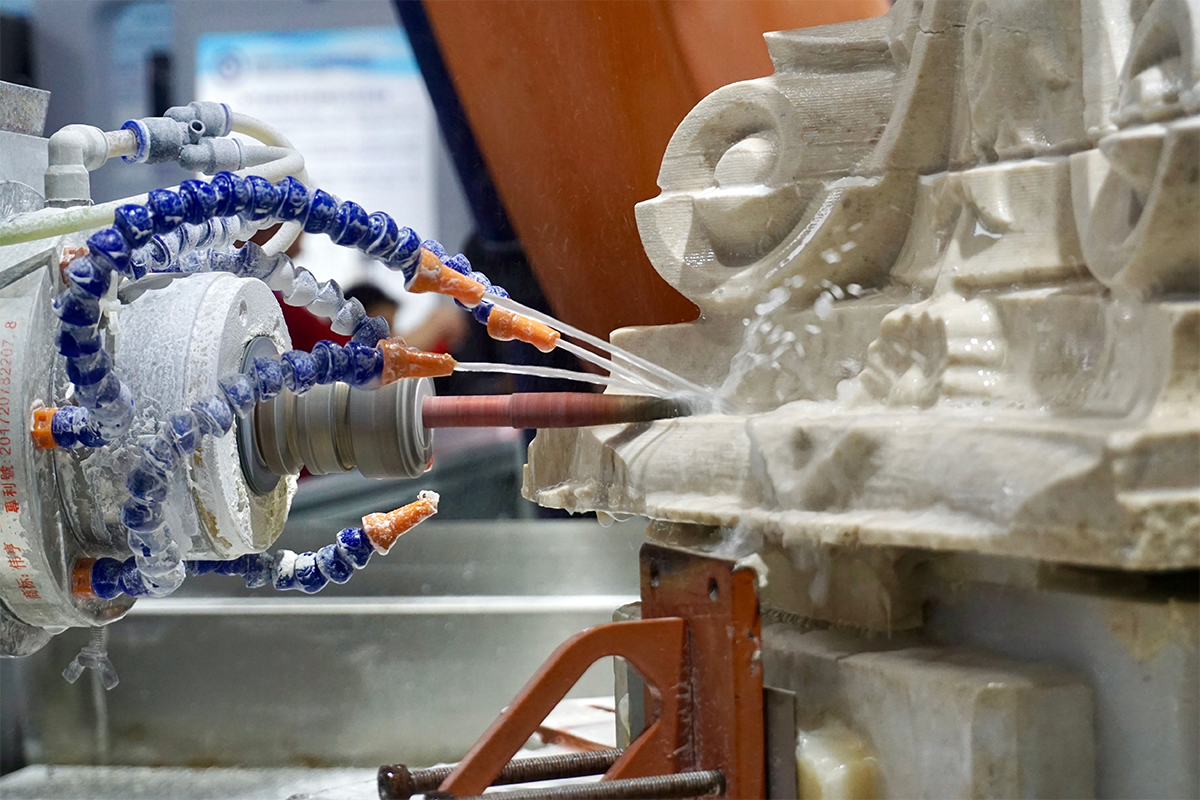
CNC routing, often described as CNC engraving, is a computer-controlled process that removes material with a rotating cutting tool. It is not limited to lettering or decorative patterns. A modern CNC router can cut profiles, drill holes, machine pockets, create grooves, flatten surfaces, and carve three-dimensional shapes. The process is widely used for wood, plastics, foam, composite panels, and some soft metals, especially when parts are large, flat, customized, or repeatedly produced.
1. What Is CNC Routing?
CNC stands for Computer Numerical Control. In CNC routing, a digital program controls a high-speed spindle and moves the cutter along the X, Y, and Z axes. The workpiece is usually fixed to the table while the cutter follows a toolpath created in CAD and CAM software.
A CNC router normally includes a frame, worktable, spindle, drive motors, guide rails, controller, cutting tools, and a workholding system. Industrial machines may also have a vacuum table, automatic tool changer, dust collector, lubrication system, or automatic loading equipment. Compared with manual routing, CNC routing provides better repeatability, faster design changes, and more consistent batch production.
2. What Does a CNC Router Do?
CNC routers perform profile cutting, drilling, grooving, pocketing, trimming, chamfering, surface flattening, engraving, nesting, and three-dimensional carving. Their large work areas make them particularly useful for sheet materials.
Furniture manufacturers use CNC routers for cabinet doors, wardrobe panels, tabletops, wooden doors, decorative screens, and joints. Sign makers produce acrylic letters, PVC signs, logos, nameplates, light-box panels, and display stands. Architectural companies machine wall panels, ceiling panels, carved partitions, and facade components.
Transportation applications include automotive interior panels, dashboard prototypes, seat foam, acoustic insulation, flooring templates, and composite panels. Electronics and automation companies produce control panels, protective covers, insulation boards, test fixtures, mounting plates, machine guards, and jigs. CNC routing is also used for packaging inserts, vacuum-forming molds, casting patterns, models, prototypes, marine panels, and composite trimming. These parts are often large, lightweight, irregular, or frequently customized.
3. CNC Routing Workflow
Step 1: Create the CAD design. Define the part outline, dimensions, holes, slots, pockets, text, and three-dimensional surfaces in CAD software.
Step 2: Prepare the CAM program. Import the design, choose operations such as profiling, drilling, pocketing, engraving, roughing, or finishing, and determine the machining order.
Step 3: Select the cutting tool. Use a suitable cutter for the material and feature. Common choices include straight cutters, V-bits, ball-nose tools, compression cutters, and single-flute tools.
Step 4: Set machining parameters. Enter the spindle speed, feed rate, plunge rate, cutting depth, allowance, entry method, and cutting direction.
Step 5: Generate and simulate the toolpath. Check the program for collisions, excessive depth, poor sequencing, and contact with clamps.
Step 6: Generate the CNC program. Use a compatible post-processor to convert the toolpath into G-code or another controller format.
Step 7: Secure the workpiece. Fix the material with vacuum, clamps, screws, locating pins, tape, or a dedicated fixture.
Step 8: Set the tool and origin. Install the cutter, measure the material, and establish the X, Y, and Z work coordinates.
Step 9: Test and machine. Perform a dry run or test cut, then run the full program while monitoring cutting sound, chips, dust, and tool condition.
Step 10: Inspect and finish. Measure the part and complete any deburring, sanding, polishing, painting, cleaning, or assembly.
4. What Materials Can a CNC Router Cut?
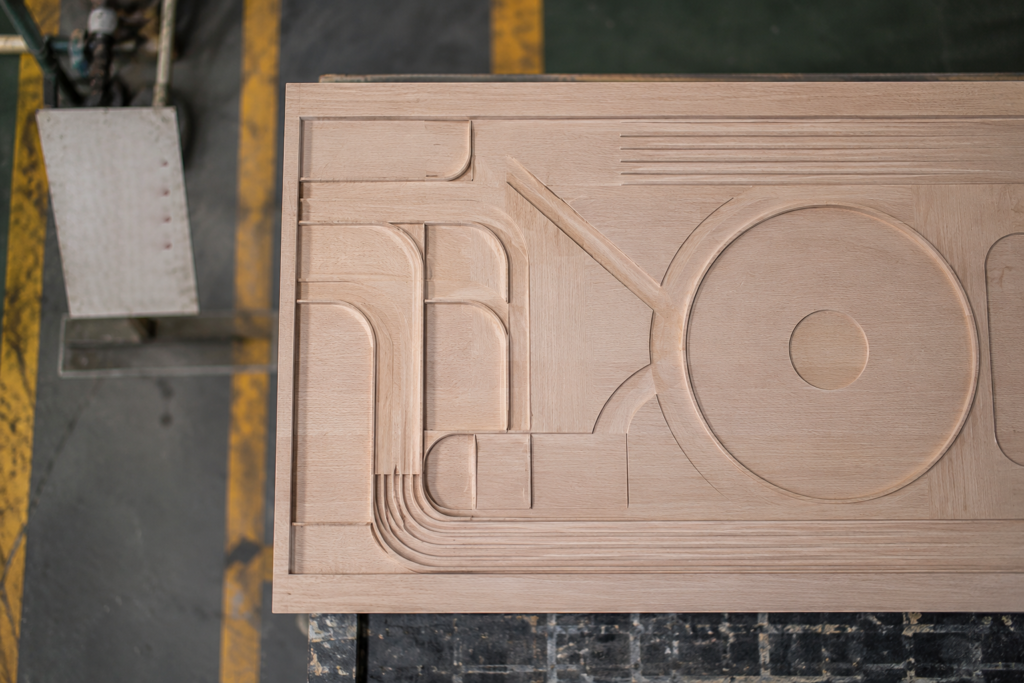
CNC routers can process many materials, but tool selection, workholding, dust control, and cutting parameters must match the material. Wood products such as MDF, plywood, solid wood, particleboard, and bamboo are used for furniture, doors, signs, screens, and musical-instrument parts. They cut easily but create dust and may splinter along laminated edges.
Acrylic, PVC, ABS, HDPE, POM, polycarbonate, and other plastics are used for signs, covers, displays, electrical panels, fixtures, and machine guards. Heat and chip removal must be controlled to prevent melting. EVA, PU, EPS, and modeling foams are common in packaging inserts, automotive components, molds, models, and prototypes. Foam requires little cutting force but can deform during clamping.
Fiberglass, carbon fiber, honeycomb panels, phenolic sheets, and aluminum composite panels are used in aerospace, vehicles, construction, electronics, and marine products. These materials can be abrasive and may produce hazardous dust. Rigid CNC routers can also machine aluminum, brass, and copper for panels, nameplates, mounting plates, enclosures, and prototypes. Soft-metal cutting requires secure clamping, shallow passes, effective chip removal, and sometimes air cooling or lubrication.
| Material | Examples | Industries | Typical parts | Key consideration |
| Wood | MDF, plywood, solid wood | Furniture, decoration | Doors, panels, screens | Dust and edge quality |
| Plastics | Acrylic, PVC, ABS, POM | Advertising, electronics | Signs, covers, fixtures | Heat and chip control |
| Foam | EVA, PU, EPS | Packaging, automotive | Inserts, molds, models | Clamping deformation |
| Composites | Fiberglass, carbon fiber, honeycomb | Aerospace, construction | Interior and insulation panels | Tool wear and dust |
| Soft metals | Aluminum, brass, copper | Automation, prototyping | Panels, plates, enclosures | Rigidity and chip removal |
Hard steel, hardened stainless steel, titanium, and high-strength mold materials are generally better suited to CNC milling machines or machining centers.
5. CNC Routing vs. CNC Milling
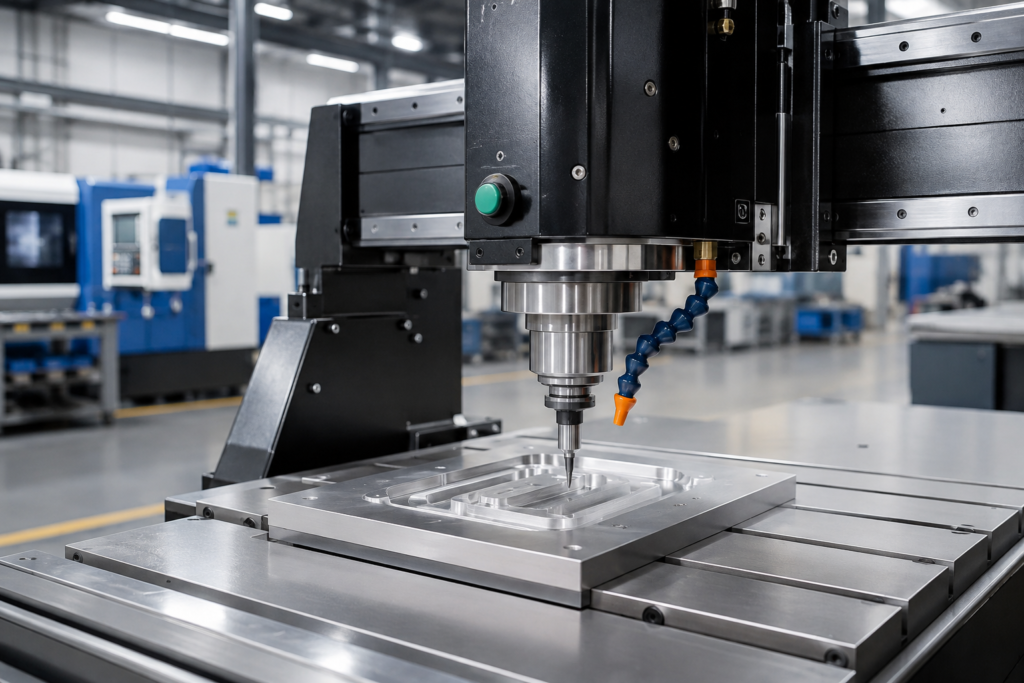
Both processes use rotating cutters, but routers are generally optimized for large sheets, high spindle speeds, and lighter cutting forces. Milling machines are designed for greater rigidity, torque, precision, and deeper metal cutting.
| Comparison | CNC routing | CNC milling |
| Machine structure | Usually a large gantry | Vertical, horizontal, or gantry mill |
| Rigidity | Low to medium | Medium to very high |
| Typical materials | Wood, plastics, foam, composites, aluminum | Aluminum, steel, stainless steel, engineering plastics |
| Cutting style | Fast, shallow, multi-pass cutting | Deeper and heavier cutting |
| Typical parts | Panels, signs, furniture, foam molds | Molds, housings, brackets, precision parts |
| Main advantage | Efficient large-sheet machining | Precision and heavy metal cutting |
Choose CNC routing for large wooden panels, plastic signs, foam molds, composite sheets, and light aluminum work. Choose CNC milling for tight tolerances, deep pockets, accurate bores, mating surfaces, hard metals, and parts exposed to high cutting forces.
6. How to Choose a CNC Router
Start with the actual material and part. Woodworking usually requires a large table, strong vacuum holding, effective dust collection, nesting software, and possibly automatic tool changing. Plastics require stable speed, controlled heat, and good chip evacuation. Foam work may require long cutters and greater Z-axis travel. Composites need specialized tools and enclosed dust control. Aluminum requires a rigid frame, reliable spindle bearings, secure clamping, and lubrication or air cooling when necessary.
Match the working area, axis travel, and gantry clearance to the largest regular part, allowing extra space for clamps and tool movement. Three-axis machines handle most flat parts. A rotary fourth axis supports cylindrical engraving, while complex multi-sided shapes may require four- or five-axis equipment.
Production volume determines the useful level of automation. Manual tool changes may be adequate for prototypes. Frequent product changes benefit from automatic tool changers, vacuum zones, automatic measurement, and easy program switching. High-volume production may justify automatic loading and multiple work zones.
Review positioning accuracy, repeatability, spindle runout, guide rails, transmission, machine weight, spindle power, tool capacity, controller, vacuum performance, and software compatibility. Before purchasing, request a test cut using the real material and a representative drawing. Evaluate finished-part accuracy, edge quality, cycle time, tool life, and workholding rather than relying only on catalog specifications.
7. Advantages and Disadvantages of CNC Routing
CNC routing processes large sheets quickly, produces complex profiles, and repeats digital designs consistently. A single machine can cut, drill, groove, pocket, engrave, and shape surfaces with different tools. Digital files are easy to modify, making the process useful for customized products and rapid prototypes. Nesting software can also reduce sheet waste.
The main limitations are lower rigidity than a machining center and limited suitability for hard-metal cutting. Tight-tolerance holes and precision mating surfaces may require CNC milling. Dust from wood and composites must be controlled, plastics can melt, and small parts can move without reliable workholding. Operators also need knowledge of CAD, CAM, cutters, machining parameters, and safety. Additional costs may include software, tooling, vacuum pumps, dust collectors, fixtures, and cooling equipment.
8. Frequently Asked Questions
1. Is CNC routing the same as CNC engraving?
The terms overlap. Engraving often emphasizes letters, logos, and surface details, while routing also includes cutting, drilling, grooving, pocketing, and three-dimensional carving.
2. Can a CNC router cut aluminum?
Yes, provided that the machine is rigid, the workpiece is securely fixed, the cutter is suitable, and chips are removed effectively.
3. Can a CNC router cut steel?
Most standard routers are not suitable for steel. A CNC milling machine normally provides the required rigidity, torque, and cooling.
4. What software is required?
A typical workflow uses CAD software for design, CAM software for toolpath generation, and controller software to run the machine.
5. Do CNC routers use G-code?
Most machines use G-code or another compatible numerical-control format generated by CAM software.
6. What parts are best suited to CNC routing?
Large panels, signs, furniture parts, packaging inserts, decorative components, fixtures, prototypes, and lightweight three-dimensional models are strong candidates.
7. Is CNC routing difficult to learn?
Basic two-dimensional cutting is relatively accessible. Three-dimensional, composite, aluminum, and multi-axis work requires more experience.
9. Conclusion
CNC routing is a flexible manufacturing process for cutting, drilling, grooving, engraving, and three-dimensional shaping. It is widely used for furniture, signage, packaging, vehicle interiors, electrical panels, composites, molds, fixtures, and prototypes. Wood, plastics, foam, composites, and soft metals can be machined when the machine, cutter, parameters, and workholding are suitable.Compared with CNC milling, routing is usually better for large sheets and lightweight materials, while milling is better for hard metals, deep cuts, and precision mechanical features. The right CNC router is the machine that can produce a company’s typical parts consistently, safely, and economically.