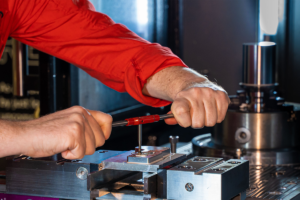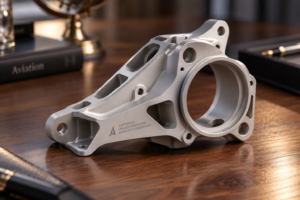
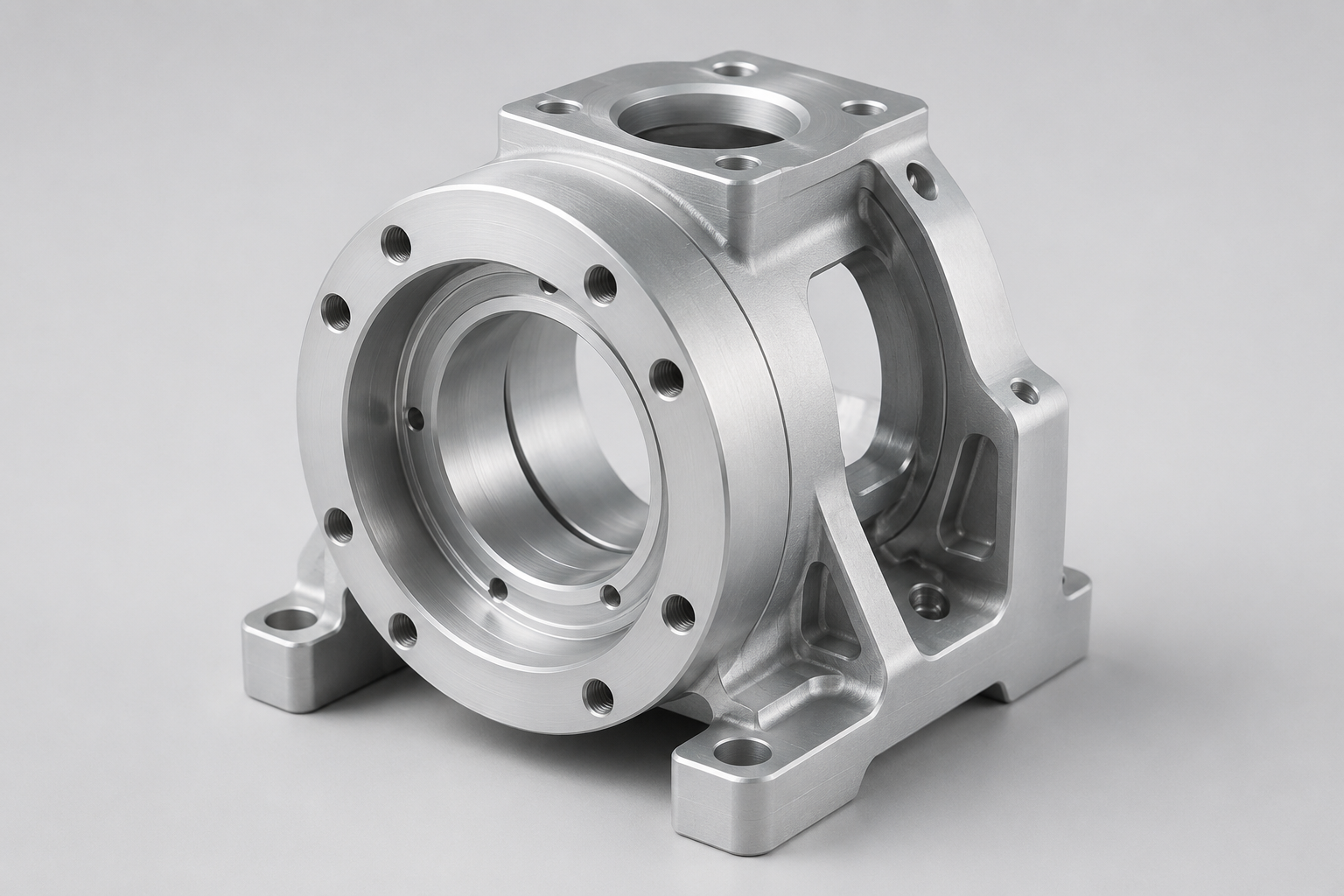
Rapid prototyping is a manufacturing approach used to quickly turn a product design into a physical part for evaluation, testing, and design verification. In CNC machining, rapid prototyping usually means producing one or a small number of precision parts directly from CAD models and engineering drawings without investing in dedicated tooling.
For mechanical engineers, CNC rapid prototyping provides a practical way to verify dimensions, assembly, mechanical performance, and material behavior before moving into production. For purchasing teams, it offers a relatively low-risk way to evaluate both the part design and the manufacturing supplier before placing larger orders.
Because CNC machining can use production-grade metals and engineering plastics, the prototype can often closely represent the final production part.
How Does CNC Rapid Prototyping Work?
The CNC rapid prototyping process normally starts with a 3D CAD model and, when necessary, a 2D technical drawing showing critical tolerances, threads, surface finishes, and other specifications.
- Reviewing CAD files and drawings.
- Performing a DFM review.
- Selecting suitable raw material.
- Creating CAM programs and machining strategies.
- CNC milling, turning, drilling, or other machining operations.
- Applying required surface finishes.
- Inspecting critical dimensions.
- Testing the finished prototype.
A good DFM review is especially important during prototyping. Small design changes can sometimes significantly reduce machining difficulty, production cost, and delivery time without affecting part function.
Why Use CNC Machining for Rapid Prototyping?
One of the biggest advantages of CNC rapid prototyping is the ability to manufacture prototypes from the same materials that may later be used in production.
Engineers can test aluminum, stainless steel, titanium, brass, copper, POM, nylon, PEEK, and other engineering materials under realistic operating conditions.
- Tight dimensional tolerances
- Accurate holes and threads
- Precision mating surfaces
- Good surface quality
- Mechanical strength
- Reliable assembly performance
This makes CNC prototypes suitable not only for visual evaluation but also for functional testing.
CNC Rapid Prototyping Materials
Material selection can strongly influence prototype performance, machining cost, and lead time.
Aluminum: Frequently used because it is lightweight, easy to machine, and suitable for many mechanical applications.
Stainless steel: Suitable for parts requiring strength, corrosion resistance, or durability.
Carbon and alloy steels: Common for structural and mechanical components requiring higher strength or wear resistance.
Brass and copper: Often selected for electrical, thermal, fluid, and precision mechanical applications.
Titanium: Used for high-performance applications where strength-to-weight ratio and corrosion resistance are important.
Engineering plastics such as POM, nylon, PC, PTFE, and PEEK can also be CNC machined when the final application requires plastic components.
Whenever possible, engineers should prototype using material that is close to the planned production material.
CNC Rapid Prototyping Tolerances
Tolerance is one of the most important factors in CNC prototype machining.
Not every dimension requires the same level of precision. Applying tight tolerances to every feature can increase machining time, inspection requirements, scrap risk, and total cost.
- Bearing seats
- Shaft diameters
- Precision holes
- Mating surfaces
- Sealing areas
- Position tolerances
- Flatness and perpendicularity requirements
Non-critical dimensions can normally use standard machining tolerances. For high-precision prototypes, inspection tools such as CMMs, height gauges, micrometers, bore gauges, and surface roughness testers may be required to verify specifications.
What Affects CNC Prototype Cost?
CNC prototype pricing depends on more than just material and part size.
Part complexity: Complex geometry may require additional machining operations or 5-axis equipment.
Machining time: More material removal generally means higher cost.
Number of setups: Parts requiring several orientations increase operator and machine time.
Tolerance requirements: Tight tolerances usually require slower machining and more inspection.
Material: Titanium, stainless steel, and high-performance plastics may cost more than standard aluminum.
Surface finish: Anodizing, plating, polishing, passivation, and other treatments add processing steps.
Quantity: Producing several prototypes together can reduce programming and setup cost per part.
Providing complete technical information during the quotation stage helps suppliers calculate pricing more accurately.
How Long Does CNC Rapid Prototyping Take?
Lead time depends largely on part complexity, material availability, finishing requirements, and inspection standards.
Simple aluminum parts may be manufactured relatively quickly, while complex multi-axis parts with tight tolerances and special finishing require additional time.
- Using standard material grades
- Avoiding unnecessary special tolerances
- Reducing the number of machining setups
- Clearly identifying critical dimensions
- Confirming surface finish requirements early
- Providing complete CAD files and drawings
Fast prototyping is not simply about machining faster. Good communication and clear engineering information are equally important.
How to Design CNC Parts for Faster Prototyping
Design for manufacturability can make a major difference in prototype cost and delivery time.
- Very deep narrow cavities
- Extremely thin walls
- Unnecessary small internal radii
- Difficult-to-access features
- Excessive tight tolerances
- Non-standard hole sizes
- Features requiring multiple special setups
Whenever possible, internal corners should allow sufficient tool radius, and holes should use standard drill sizes. A design that is easier to machine can usually be manufactured faster and more consistently.
CNC Rapid Prototyping for Functional Testing
Unlike purely visual models, CNC prototypes can be used for real engineering tests.
- Assembly testing
- Fit and clearance verification
- Load testing
- Motion testing
- Sealing tests
- Thermal testing
- Wear evaluation
- Engineering validation
These tests help engineers identify design problems before larger manufacturing orders are approved.
From CNC Prototype to Low-Volume Production
CNC prototyping can also create a smooth transition into low-volume manufacturing.
A project may start with one or two prototype parts, followed by five or ten engineering validation units. Once the design is approved, the same supplier may produce 20, 50, 100, or more parts for pilot production.
Keeping prototype and production machining with the same supplier can reduce repeated programming, communication, and quality risks. It also gives purchasing teams an opportunity to evaluate the supplier’s machining capability, inspection process, responsiveness, and delivery performance before increasing order volume.
How to Choose a CNC Rapid Prototyping Supplier
Choosing the right supplier is as important as choosing the right machining process.
- CNC milling and turning capability
- 3-axis, 4-axis, and 5-axis equipment
- Available materials
- Achievable tolerances
- Quality inspection capability
- DFM engineering support
- Surface finishing options
- Prototype lead time
- Low-volume production capability
- Communication efficiency
A reliable supplier should not simply quote the drawing. They should also identify potential manufacturing risks and suggest practical solutions when necessary.
What Files Are Needed for CNC Rapid Prototyping?
For an accurate quotation, suppliers usually need a 3D CAD file, preferably in formats such as STEP, STP, IGES, or X_T.
- Tight tolerances
- GD&T requirements
- Threads
- Surface roughness specifications
- Special inspection requirements
- Critical dimensions
Material, quantity, surface treatment, and required delivery time should also be clearly specified.
Conclusion
CNC rapid prototyping allows engineers to quickly turn digital designs into precision functional parts made from real engineering materials. It provides a practical way to test fit, function, tolerance, assembly, and mechanical performance before moving into larger production quantities.
For purchasing teams, CNC prototypes also provide an opportunity to evaluate manufacturing cost, lead time, quality, and supplier capability with relatively low initial risk.
The most successful CNC rapid prototyping projects combine a manufacturable design, appropriate material, realistic tolerance requirements, clear technical documentation, and an experienced machining supplier.