Metalloids are a small group of elements with properties between metals and nonmetals. Although they are not used as structural materials as often as steel or aluminum, they are essential to electronics, solar energy, optics, advanced alloys, and high-performance manufacturing. Silicon is the best-known example because it is the foundation of most modern semiconductor devices.
1. What Are Metalloids?
Metalloids are elements that show a mixture of metallic and nonmetallic properties. They are generally located near the zigzag “stair-step” line on the periodic table.
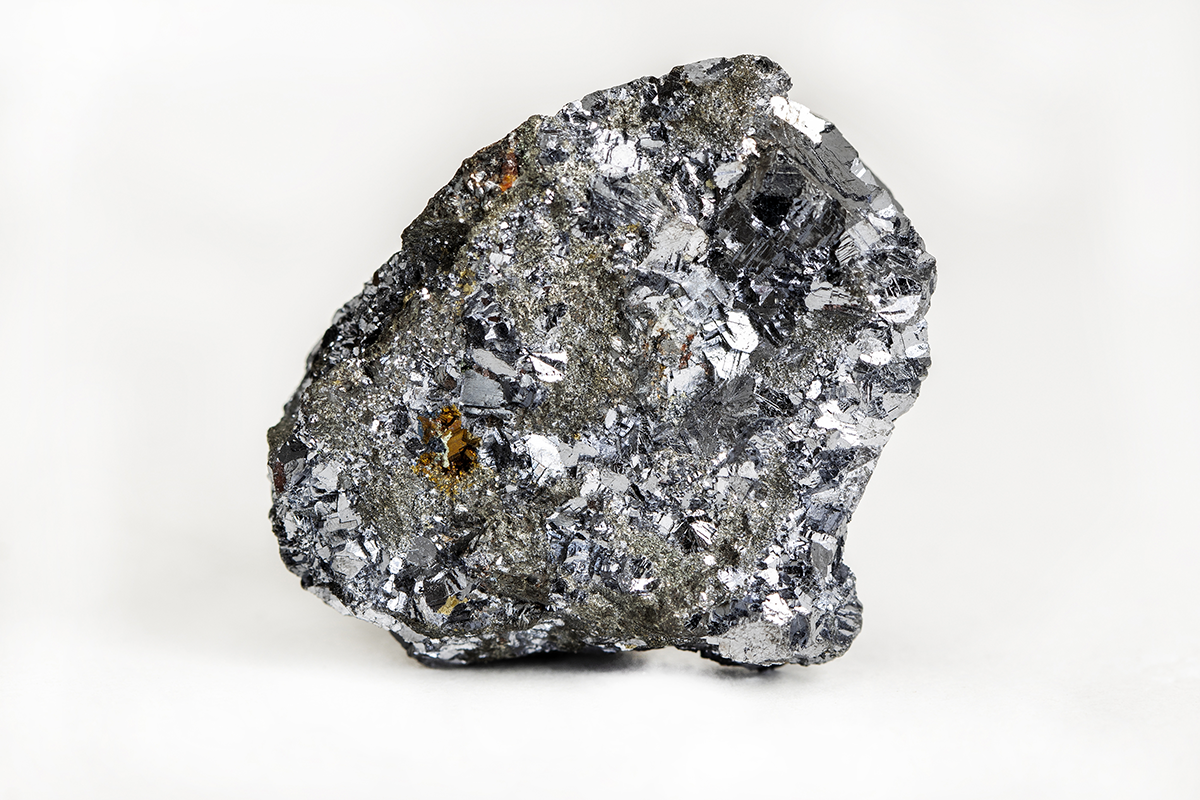
There is no universally accepted list of metalloids, but the six most commonly recognized elements are boron (B), silicon (Si), germanium (Ge), arsenic (As), antimony (Sb), and tellurium (Te). Some classification systems may include several additional elements.
Metalloids may look metallic, but many are brittle rather than ductile. Their electrical conductivity is usually lower than that of typical metals, while their electrical behavior can be more easily controlled than that of many nonmetals.
This unusual combination of properties is one reason metalloids are so important in electronics and advanced manufacturing.
2. Do Metalloids Conduct Electricity? Why Can They Be Used as Semiconductors?
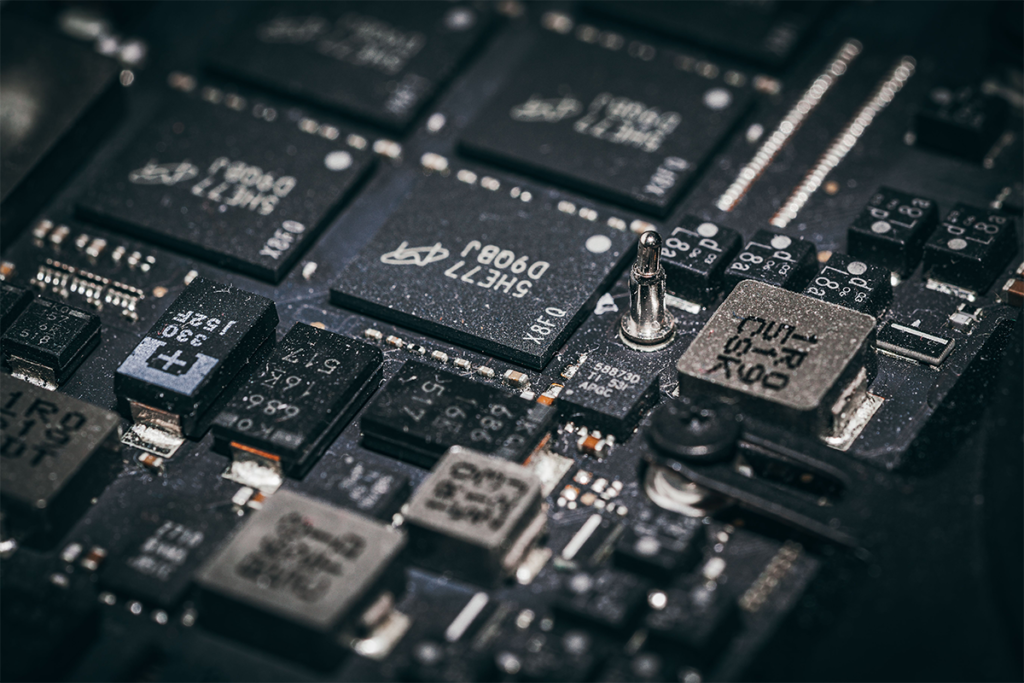
Yes, many metalloids can conduct electricity, but they do not normally conduct electricity as freely as metals such as copper or aluminum.
Their electrical conductivity can change depending on factors such as temperature, purity, crystal structure, and the presence of small amounts of other elements. Silicon is the best-known example.
Pure silicon has relatively low electrical conductivity compared with a metal. However, semiconductor manufacturers can intentionally add very small quantities of selected elements to silicon through a process called doping.
Doping changes the number and behavior of charge carriers inside the silicon crystal, allowing engineers to control how easily electric current flows through the material.
This controllable conductivity is what makes semiconductor materials so useful. A good conductor such as copper allows current to flow easily all the time, while an insulator strongly resists current. A semiconductor sits between these two conditions and can be engineered to switch, regulate, amplify, or detect electrical signals.
This ability makes semiconductor materials ideal for transistors, integrated circuits, sensors, solar cells, and many other electronic devices. However, not every metalloid behaves in exactly the same way. Silicon and germanium are particularly important because engineers can control their electrical properties very precisely.
3. What Are Common Semiconductor Materials, and Why Are Metalloids Suitable for Semiconductors?
There are several major types of semiconductor materials. Common elemental semiconductors include:
- Silicon (Si)
- Germanium (Ge)
Common compound semiconductors include:
- Gallium arsenide (GaAs)
- Gallium nitride (GaN)
- Silicon carbide (SiC)
Wide-bandgap semiconductor materials such as silicon carbide and gallium nitride are especially important for high-power, high-voltage, and high-temperature electronics.
Among all semiconductor materials, silicon remains the most important material for conventional integrated circuits. One major advantage is availability. Silicon is abundant and its manufacturing technology has been developed for decades.
Another important advantage is that silicon naturally forms a stable insulating layer of silicon dioxide, or SiO2. This oxide layer is extremely useful when manufacturing semiconductor devices and is one of the reasons silicon became the dominant semiconductor material.
Silicon and germanium are suitable for semiconductor applications because their electronic structures allow conductivity to be modified through doping. Manufacturers can create different electrically active regions on the same wafer and use them to build components such as diodes and transistors.
However, metalloids and semiconductors are not the same category. Not every semiconductor is a metalloid, and not every metalloid is widely used as a standalone semiconductor material.
4. How Are Metalloids Used in Modern Manufacturing?
Metalloids appear in modern manufacturing as pure elements, semiconductor crystals, compounds, alloying additions, and functional additives.
Electronics and Semiconductor Manufacturing
Silicon is used to produce microprocessors, memory chips, sensors, power devices, and many other electronic components. Germanium and silicon-germanium materials are used in specialized high-speed electronics, infrared optics, communications, and photonic applications.
Solar Energy
Silicon is widely used for manufacturing photovoltaic cells and solar panels. Tellurium is also important in certain thin-film photovoltaic materials.
Metal Alloys
Silicon is commonly added to aluminum alloys. It can improve casting characteristics and influence properties such as hardness, wear behavior, and dimensional stability.
Glass, Ceramics, and Composites
Boron is widely used in borosilicate glass and advanced ceramic materials. Boron-containing materials can offer good heat resistance, hardness, or low weight.
Flame-Retardant and Thermoelectric Materials
Antimony compounds are used in certain flame-retardant systems, while tellurium-containing materials are important in thermoelectric devices and specialized energy applications.
Metalloid-containing compounds such as silicon carbide and boron carbide are also important in demanding engineering applications because of their hardness, heat resistance, and wear resistance. These are compounds rather than pure metalloids, although the metalloid elements play an important role in their properties.
5. Can Metalloids Be CNC Machined?
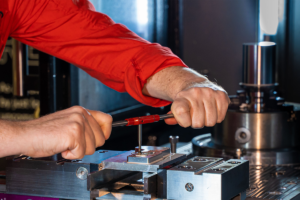
Yes, some metalloids can be machined using CNC equipment, but machining them may be very different from machining aluminum, stainless steel, or brass.
Crystalline silicon, for example, can be processed using specialized CNC-based or precision processes such as:
- Ultra-precision diamond turning
- Micro-milling
- Diamond grinding
- Precision cutting
- Lapping and polishing
Silicon is naturally a hard and brittle material. Under carefully controlled machining conditions, it can sometimes be removed in a ductile cutting mode, which helps reduce cracking and brittle fracture.
However, conventional aggressive milling parameters can cause edge chipping, cracks, surface damage, or even complete fracture. Successful machining may require diamond cutting tools, extremely small depths of cut, rigid CNC machines, stable workholding, and carefully controlled feeds and speeds.
It is also much more common for ordinary CNC machine shops to machine alloys containing metalloids rather than pure metalloid crystals. Aluminum-silicon alloys are a good example. They can be CNC milled and turned using conventional equipment, although higher silicon content can increase abrasiveness and accelerate cutting-tool wear.
Therefore, saying that “metalloids are CNC machinable” is too general. Engineers should evaluate the specific element, compound, alloy, crystal structure, geometry, tolerance, and surface-finish requirement.
6. What Are the Main Challenges in Machining Metalloid Materials?
One of the biggest challenges is brittleness. Many metalloid crystals and metalloid-rich materials do not deform plastically in the same way as common engineering metals. When cutting forces become too high, the material may chip or crack instead of forming a normal metal chip.
Another challenge is tool wear. Hard silicon-, boron-, or carbide-containing phases can be highly abrasive. Cutting edges may wear faster, resulting in poor dimensional accuracy and surface quality.
Surface and subsurface damage is another major concern. A machined component can appear smooth while still containing microscopic cracks below the surface. This is particularly important for semiconductor wafers, optical components, sensors, and other high-precision parts.
Depending on the material, manufacturers may need:
- Diamond cutting tools
- Very small depths of cut
- Fine grinding
- Low-vibration machines
- Stable workholding
- Carefully controlled coolant
- Lapping or polishing after machining
For materials containing arsenic, antimony, or other potentially hazardous substances, manufacturers may also need appropriate controls for dust, chips, coolant, and process waste.
7. What Are the Future Trends for Metalloids?

Metalloid-based and metalloid-containing materials are expected to remain important as electronics, energy systems, and precision manufacturing continue to develop.
Advanced Semiconductors
Artificial intelligence, data centers, electric vehicles, advanced sensors, communications, photonics, and quantum technologies are increasing demand for high-performance semiconductor materials.
Silicon will remain important, while silicon-germanium and specialized compound semiconductors will support applications requiring higher speeds, frequencies, power levels, or optical performance.
Next-Generation Batteries
Silicon-based materials are being studied for advanced battery electrodes. Silicon nanostructures have attracted interest because they may help increase battery energy density, although durability and material expansion remain important engineering challenges.
Precision and Nanoscale Manufacturing
Manufacturing technologies for brittle materials are improving rapidly. Ultra-precision machining, laser-assisted processing, advanced grinding, additive manufacturing, and nanoscale fabrication could make difficult metalloid-containing materials easier to process.
These technologies may reduce cracking, improve surface quality, and allow manufacturers to produce increasingly complex semiconductor, optical, energy, and precision-engineering components.
8. Frequently Asked Questions About Metalloids
What is the most common metalloid?
Silicon is one of the most abundant and widely used metalloids. It is especially important in semiconductor and solar-cell manufacturing.
Are metalloids metals?
No. Metalloids are not simply another type of metal. They have a combination of metallic and nonmetallic characteristics.
Are metalloids brittle?
Most commonly recognized metalloids are brittle in solid form. They are generally much less ductile and malleable than typical engineering metals.
Are all metalloids semiconductors?
No. Several metalloids show semiconductor behavior, but their practical usefulness varies. Silicon and germanium are the best-known elemental semiconductor examples.
Why is silicon used more than germanium?
Silicon is abundant, performs well across a useful range of operating temperatures, and forms a stable insulating oxide that is extremely useful during semiconductor manufacturing.
Can silicon be CNC machined?
Yes. However, crystalline silicon generally requires specialized tools and carefully controlled machining parameters because it is hard and brittle.
What industries use metalloids?
Important industries include semiconductor manufacturing, electronics, solar energy, automotive, aerospace, optics, glass and ceramics, chemical processing, and advanced materials manufacturing.
Conclusion
Metalloids combine useful electrical, chemical, and mechanical characteristics that make them important far beyond the periodic table. Silicon and germanium are central to semiconductor technology, while boron, antimony, tellurium, and metalloid-containing compounds support advanced materials, optics, energy systems, and modern manufacturing.
For mechanical engineers, the most important machining lesson is that these materials cannot be treated like ordinary metals. Some are CNC machinable, but brittle crystalline materials often require ultra-precision machining, grinding, or other specialized processes. As semiconductor technology, energy storage, electronics, and advanced manufacturing continue to evolve, metalloids will remain important materials for future products and engineering systems.