
As Trump visits China again, global attention has returned to manufacturing, trade, and the electric vehicle industry. Recently, the United States expressed interest in welcoming Chinese companies to establish electric vehicle factories in America. This development is not only reshaping the global automotive supply chain, but also creating new opportunities for the CNC precision machining services industry.
1. The Impact of Trump’s China Visit on China’s EV Industry
Trump’s visit mainly focused on trade, manufacturing cooperation, and the new energy vehicle sector. On one hand, the U.S. government hopes to protect domestic automotive manufacturing. On the other hand, it also wants to attract advanced Chinese EV manufacturing capabilities into the American market.
Chinese electric vehicle manufacturers have strong advantages in cost control, supply chain integration, and production technology, especially in battery systems, intelligent control, and lightweight manufacturing. If Chinese EV companies are encouraged to establish factories in the United States, more automotive component suppliers will also enter the North American market, greatly increasing the demand for precision cnc machining parts manufacturers.
As the EV market expands globally, cooperation between Chinese and American manufacturers could further accelerate innovation and industrial upgrades across the automotive sector.
2. The Important Role of CNC Machining in the Electric Vehicle Industry
Electric vehicles rely heavily on high-precision CNC machining for many critical components, including:
Battery housings and cooling systems
Motor housings and transmission components
Autonomous driving sensor structures
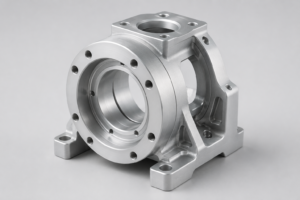
Lightweight aluminum alloy parts
Compared with traditional fuel vehicles, EVs require lighter weight structures and more precise assembly standards. Therefore, manufacturers place higher demands on part tolerances, surface finishing, and consistency. CNC machining can achieve tolerances as precise as 0.01mm, ensuring stable and reliable performance of automotive components.
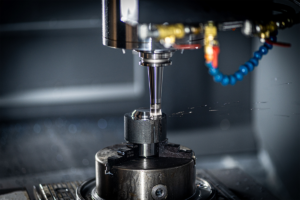
In addition, EV production emphasizes automation and mass production. Five-axis CNC machining, turning-milling combined processing, and automated inspection technologies have become essential manufacturing methods in the EV industry.
3. The Differences Between CNC Machining in the United States and China
The advantages of American CNC manufacturing mainly lie in advanced technology, high automation levels, and localized production capabilities. U.S. manufacturers are especially strong in aerospace and high-value automotive components.
Meanwhile, Chinese CNC machining companies offer several key advantages:
More complete industrial supply chains
Higher production efficiency
More competitive manufacturing costs
Faster delivery times
In recent years, Chinese precision machining manufacturers have significantly improved their capabilities and are now able to meet the strict quality standards of European and American customers, including complex machining requirements, tight tolerance control, and international certifications.
Within the EV industry, China’s CNC supply chain is gradually becoming an essential part of global manufacturing.
4. How Can CNC Parts Manufacturers Stand Out in This International Environment?
Under the current global trade environment, CNC manufacturers must continuously improve their competitiveness. The first priority is maintaining stable machining precision and product quality. Secondly, obtaining international certifications such as ISO and IATF automotive standards is becoming increasingly important.
In addition, fast quotation services, customized production solutions, and stable lead times are critical factors for overseas buyers when selecting suppliers. Automotive industry customers are more likely to establish long-term partnerships with manufacturers that can provide complete machining solutions rather than simple component production.
For CNC suppliers, investing in automation equipment, advanced inspection systems, and professional engineering support will help them gain stronger positions in the rapidly growing EV market.
Conclusion
As the global electric vehicle market continues to expand, CNC precision machining will play an increasingly important role in automotive manufacturing. Whether Chinese companies establish factories in the United States or global supply chains continue to evolve, the demand for high-precision CNC components will continue to grow rapidly.
For professional automotive part machining companies, this represents a major opportunity to enter the international EV supply chain.
High-quality automotive part machining services can help EV manufacturers improve efficiency, reduce production costs, and ensure precision performance. In the future, CNC machining will remain a key technology driving the development of the electric vehicle industry.