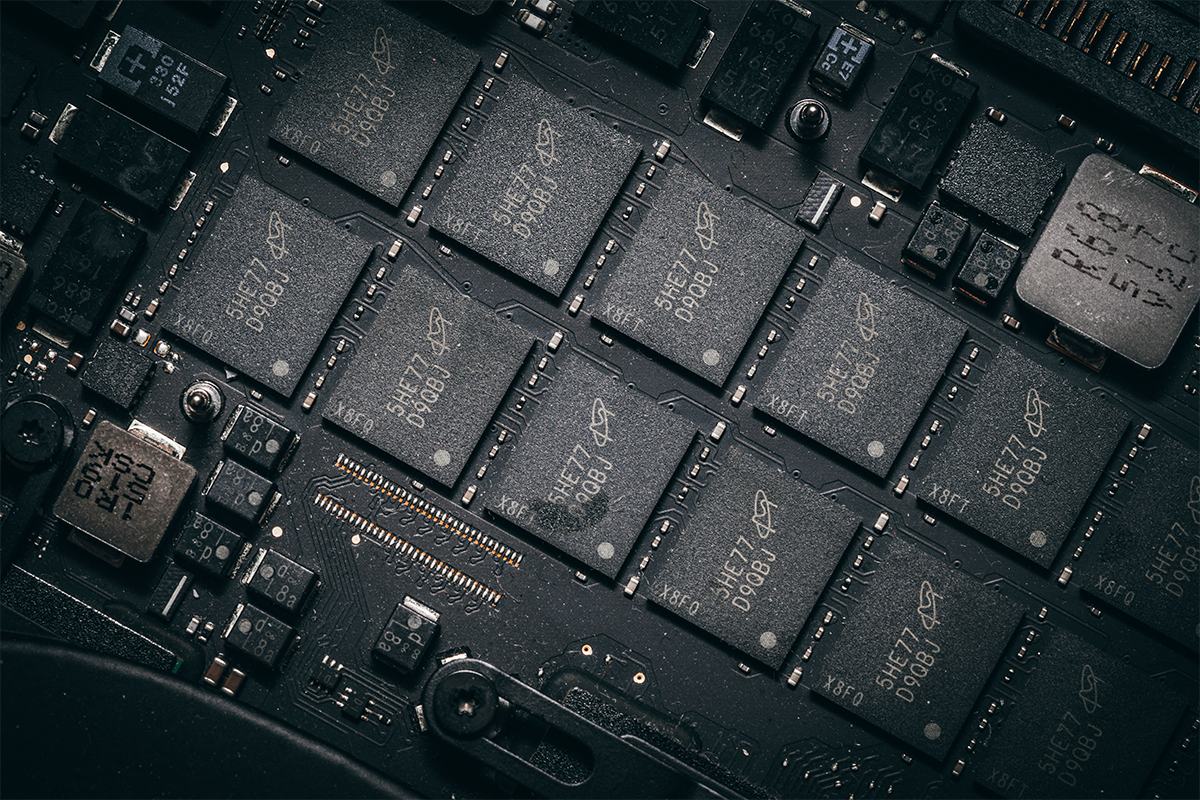
Electronic components are essential to modern electronics, from industrial control systems and communication equipment to medical devices and electronic testing instruments. Behind these products are various manufacturing processes, materials, and precision components that determine their performance, reliability, and service life.
For engineers and procurement professionals, understanding electronic component manufacturing helps improve product design, control costs, and select reliable manufacturing partners. This guide covers common component types, manufacturing processes, design considerations, material selection, surface treatments, and how to choose a qualified supplier.
1. Types of Electronic Components and Their Applications
Electronic components can be divided into electrical and electronic elements, semiconductor devices, and mechanical components used in electronic equipment. Each category serves a different purpose and requires different manufacturing methods.
Although many electronic components are manufactured through semiconductor fabrication, electronic assembly, or specialized production processes, mechanical components often require machining and fabrication.
For example, aluminum enclosures protect sensitive electronics from environmental exposure and mechanical damage. Heat sinks help dissipate heat generated by power modules, while mounting brackets and positioning blocks ensure that circuit boards and electronic devices are installed accurately.
These mechanical parts often require custom dimensions, precise holes, threaded features, and specific surface finishes. CNC machining is particularly suitable for producing such components when accuracy, design flexibility, and consistent quality are important.
Component Types and Applications
| Component Type | Common Examples | Main Applications |
| Passive components | Resistors, capacitors, inductors | Circuit boards, power supplies, signal processing |
| Semiconductor components | Integrated circuits, diodes, transistors | Computers, communication equipment, industrial controls |
| Electromechanical components | Switches, relays, connectors | Control systems, electrical interfaces, automation equipment |
| Mechanical components | Enclosures, brackets, heat sinks, mounting plates | Electronic housings, cooling systems, equipment assembly |
| Precision fixtures | Test fixtures, positioning blocks, mounting bases | Electronic testing, PCB inspection, production lines |
2. Common Manufacturing Processes for Electronic Components
The appropriate manufacturing process depends on the component’s structure, material, precision requirements, production volume, and budget. Different processes may also be combined to manufacture a single electronic product.
CNC Machining
CNC machining uses computer-controlled cutting tools to remove material from metal or plastic workpieces. CNC milling is suitable for complex surfaces, slots, holes, and mounting features, while CNC turning is commonly used for cylindrical components, shafts, and connectors.
It is widely used to manufacture electronic equipment housings, heat sinks, mounting brackets, precision fixtures, and custom mechanical parts. CNC machining offers high dimensional accuracy, material flexibility, and a practical solution for prototypes, small batches, and repeat production.
Sheet Metal Fabrication
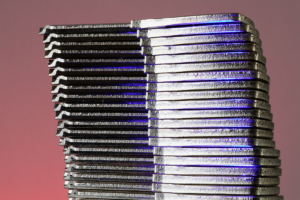
Sheet metal fabrication involves processes such as laser cutting, punching, bending, and welding. It is commonly used to produce electronic cabinets, equipment panels, protective covers, and chassis.
This method is often cost-effective for thin-walled structures and larger enclosures. However, complex three-dimensional features or precision machined holes may require additional machining operations.
Injection Molding
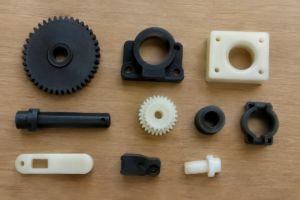
Injection molding produces plastic components by injecting molten material into a mold. It is suitable for plastic housings, connector bodies, insulating parts, and other components manufactured in large quantities.
Although tooling costs can be high, the cost per part can become low at high production volumes. It is therefore particularly suitable for products with stable designs and substantial demand.
Die Casting
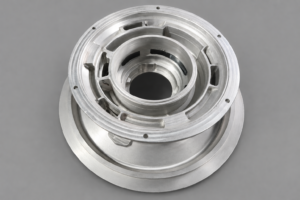
Die casting forces molten metal into a reusable mold under pressure. Aluminum and zinc alloys are commonly used to produce electronic housings, structural brackets, and components with complex shapes.
It offers good production efficiency for medium- to high-volume orders. However, mold costs and design limitations should be considered when selecting this process.
3D Printing
3D printing builds parts layer by layer from a digital model. It is useful for rapid prototyping, complex geometries, and low-volume production where conventional tooling may not be economical.
Depending on the material and printing technology, additional machining or surface finishing may be required to achieve the required dimensional accuracy and appearance.
How should you choose? CNC machining is often a strong option for custom metal parts, precision features, and low-volume orders. Sheet metal fabrication suits thin-walled structures, while injection molding and die casting are often more economical for high-volume production after tooling costs are considered.
3. Common Specifications and Design Considerations for Custom Electronic Parts
Custom mechanical parts used in electronic equipment must meet dimensional, functional, thermal, and environmental requirements. Clear specifications help manufacturers produce components that fit correctly and perform reliably.
Dimensional Tolerances
Tolerance defines the allowable variation in a component’s dimensions. Tight tolerances may be necessary for connector interfaces, precision mounting holes, alignment features, and parts that fit together with other components.
A tolerance of 0.01 mm may be achievable for suitable CNC-machined features, depending on the geometry, material, dimensions, machining method, and inspection conditions. However, this level of precision is not necessary for every feature and may increase manufacturing costs.
Engineers should specify tight tolerances only where function requires them. General dimensions can use more economical tolerances, helping reduce machining time and inspection costs.
Hole Positions and Thread Specifications
Mounting holes, threaded holes, and connector interfaces must align with mating components. Engineering drawings should specify hole diameters, positions, thread sizes, thread standards, and required depths.
For critical assemblies, geometric dimensioning and tolerancing (GD&T) can clarify positional accuracy, flatness, perpendicularity, and other relationships between features.
Material and Thermal Requirements
Electronic equipment may generate considerable heat during operation. Components near power modules or other heat sources should use materials with suitable thermal conductivity and operating-temperature resistance.
Material selection should also consider strength, weight, corrosion resistance, electrical conductivity, and electromagnetic shielding requirements.
Wall Thickness and Structural Design
Thin walls, deep pockets, narrow slots, and complex internal features can increase machining difficulty. Very thin sections may deform during machining, while deep cavities can introduce tool-access and chip-removal challenges.
Engineers should simplify unnecessary features, maintain practical wall thicknesses, and avoid overly complex geometries where possible.
Surface Finish and Assembly Requirements
The required surface finish depends on the component’s function. Mating surfaces may need good flatness and smoothness, while visible housings may require an attractive appearance.
Drawings should identify surface roughness requirements, coatings, masking areas, and critical dimensions that must remain within tolerance after finishing.
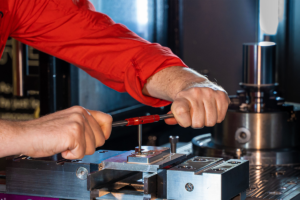
Before production, reviewing CAD models and engineering drawings with the manufacturer can help identify design issues early, reduce unnecessary costs, and prevent assembly problems.
4. Materials Used in Electronic Components
Material selection affects component performance, manufacturing cost, durability, and service life. For many custom mechanical parts used in electronic equipment, aluminum alloy, stainless steel, and brass offer a practical balance of performance and cost.
Aluminum Alloy 6061
Aluminum 6061 is widely used for electronic equipment housings, heat sinks, mounting brackets, and structural components. It offers a favorable combination of low weight, strength, machinability, and corrosion resistance.
It is also suitable for anodizing, which can improve surface protection and appearance. For many custom CNC parts, 6061 provides an economical solution without sacrificing practical performance.
Stainless Steel 304
Stainless steel 304 is commonly used for equipment brackets, fasteners, protective housings, and components exposed to moisture or corrosive environments.
It offers good corrosion resistance, strength, and durability. However, it is generally more difficult to machine than aluminum, which can increase machining time and cost. It is best suited to applications where its mechanical properties and corrosion resistance justify the additional expense.
Brass H59
Brass H59 is a copper-zinc alloy used for connectors, terminals, threaded inserts, fittings, and other electrical or mechanical interfaces. It offers good machinability, useful electrical conductivity, and a practical balance of cost and performance.
Brass is particularly suitable for small precision components that require threads, turned features, or conductive contact surfaces. However, the appropriate brass grade should be selected according to conductivity, strength, environmental requirements, and applicable regulations.
Material Comparison
| Material | Main Advantages | Common Applications | Cost Considerations |
| Aluminum 6061 | Lightweight, easy to machine, anodizable | Housings, heat sinks, brackets | Often economical for general-purpose parts |
| Stainless steel 304 | Corrosion resistance, strength, durability | Fasteners, brackets, protective parts | Higher machining costs than aluminum |
| Brass H59 | Good machinability, useful conductivity | Connectors, terminals, threaded inserts | Suitable for small precision components |
These materials are not interchangeable in every application. Copper may be preferable when high electrical or thermal conductivity is the primary requirement, while engineering plastics may be better for insulation and lightweight components. The best material depends on the component’s actual operating conditions and performance requirements.
5. Surface Finishes for Electronic Components
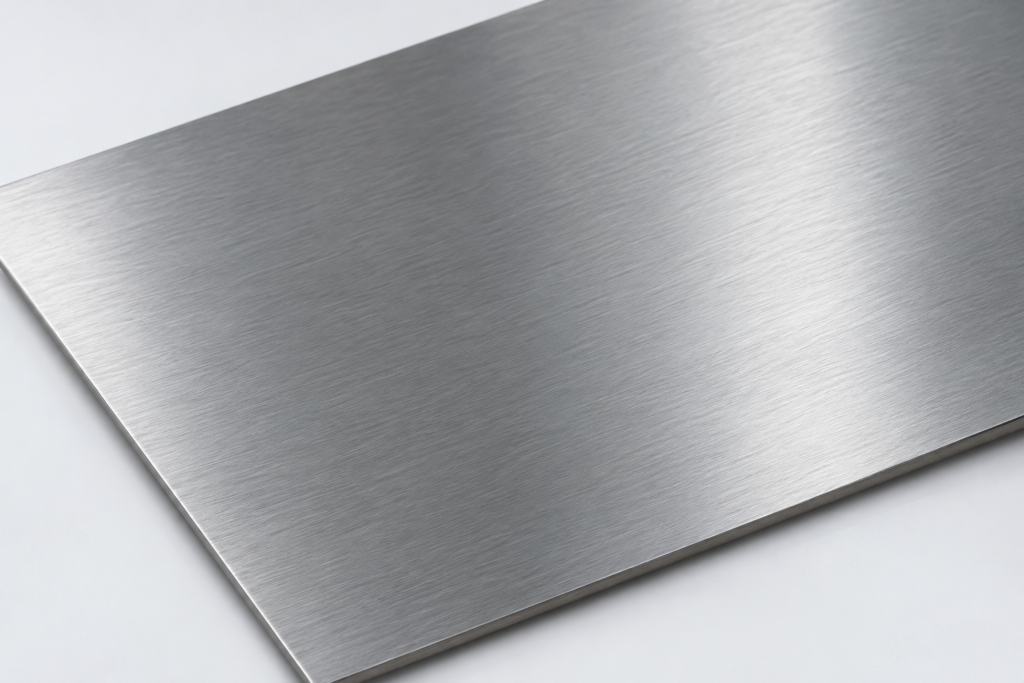
Surface finishing can improve corrosion resistance, wear resistance, electrical performance, and appearance. The appropriate treatment depends on the base material and the component’s intended function.
Anodizing
Anodizing is commonly applied to aluminum components. It creates a protective oxide layer that improves corrosion resistance and can provide a range of colors and surface appearances.
It is widely used for electronic equipment housings, mounting plates, and heat sink components. Because anodizing changes the surface dimensions slightly, critical fits and threaded features should be considered during design.
Electroless Nickel Plating
Electroless nickel plating deposits a nickel-phosphorus coating without using an external electric current. It can provide uniform coverage on complex shapes and improve corrosion resistance and surface wear performance.
It may be suitable for precision mechanical components, connector-related parts, and equipment components requiring consistent coating thickness. The coating specification should match the required hardness, corrosion protection, and electrical properties.
Passivation
Passivation is commonly used for stainless steel. It helps improve corrosion resistance by supporting the formation of a protective passive surface layer.
It is appropriate for stainless steel components used in industrial electronic equipment, enclosures, and assemblies exposed to demanding environments.
Powder Coating
Powder coating applies a dry coating to a component, followed by curing to form a protective finish. It offers good appearance, color options, and surface protection for suitable metal parts.
It is commonly used for electronic cabinets, equipment panels, and protective housings. However, coating thickness and masking requirements must be considered for precision interfaces.
Polishing and Brushing
Polishing creates a smoother surface, while brushing produces a directional texture. Both methods are used to improve appearance and, depending on the application, surface quality.
For electronic components, engineers should also consider whether a finish affects electrical contact, grounding, heat transfer, or dimensional accuracy.
The selected finish should be specified clearly on the engineering drawing, including coating type, thickness where relevant, appearance, and any surfaces that must remain untreated.
6. How to Choose a Reliable Electronic Components Supplier
Choosing a qualified supplier is essential for controlling quality, cost, and delivery schedules. For custom mechanical parts used in electronic equipment, procurement teams should evaluate the manufacturer’s engineering capabilities, production capacity, inspection systems, and communication efficiency.
Evaluate Engineering and Manufacturing Capabilities
A reliable supplier should understand technical drawings, machining tolerances, material requirements, and surface treatments. Engineering support during design review can identify manufacturing risks before production begins.
For example, an experienced machining team may recommend a more economical hole design, a practical tolerance, or an alternative material that meets functional requirements without unnecessary cost.
Check Quality Control and Inspection Equipment
Quality should be controlled throughout production rather than checked only after manufacturing. Ask whether the supplier has inspection procedures, calibrated measuring equipment, material traceability where required, and documented dimensional inspection records.
At Yiling CNC, dedicated inspection resources and in-house measurement equipment support dimensional checks before parts are completed and delivered. The inspection method should be selected according to the drawing, tolerance, and functional requirements of each component.
Confirm Production Capacity and Delivery Reliability
A supplier’s ability to meet deadlines depends on available machines, production planning, material sourcing, quality procedures, and communication.
Yiling CNC has 15 years of CNC machining experience and more than 100 sets of 3-, 4-, and 5-axis CNC machines. These capabilities support custom machining projects ranging from prototypes and small batches to larger production orders.
Buyers should confirm lead times for materials, machining, surface finishing, inspection, and shipping before placing an order. Clear communication is particularly important when products are under development or schedules are subject to change.
Compare Total Cost, Not Just Unit Price
A low unit price does not always mean the lowest overall cost. Rework, scrap, delayed delivery, inconsistent quality, and excessive inspection can increase total procurement expenses.
A competitive supplier should offer transparent quotations, suitable manufacturing recommendations, and consistent quality. As a China-based manufacturer, Yiling CNC aims to provide cost-effective custom CNC machining while maintaining controlled production and inspection processes.
Look for Flexible Order Quantities
Product development often begins with a small number of prototypes before moving to low-volume or mass production. Suppliers that accept small orders can help engineers validate designs without committing to large quantities too early.
Yiling CNC supports custom orders with no minimum order quantity requirement, making it possible to source individual prototypes and small batches as well as repeat production orders.
Confirm Tolerance and Inspection Requirements
Yiling CNC can achieve tolerances down to 0.01 mm on suitable features, subject to part geometry, material, machining conditions, and measurement requirements. Buyers should confirm critical tolerances with the manufacturer before production rather than assume that every feature can use the same precision.
Providing complete 2D drawings, 3D CAD files, material specifications, surface treatment requirements, and inspection criteria helps suppliers prepare accurate quotations and reduce production risks.
Final Thoughts
Successful electronic component manufacturing requires the right combination of materials, processes, precision, and quality control. By understanding manufacturing options and defining design requirements clearly, engineers and procurement professionals can reduce costs, improve component reliability, and avoid unnecessary production problems.For custom electronic equipment housings, brackets, heat sinks, connectors, and other precision mechanical parts, CNC machining can provide the flexibility and accuracy needed for product development and ongoing production. Working with an experienced supplier such as Yiling CNC can help simplify sourcing, support design optimization, and maintain consistent manufacturing quality.