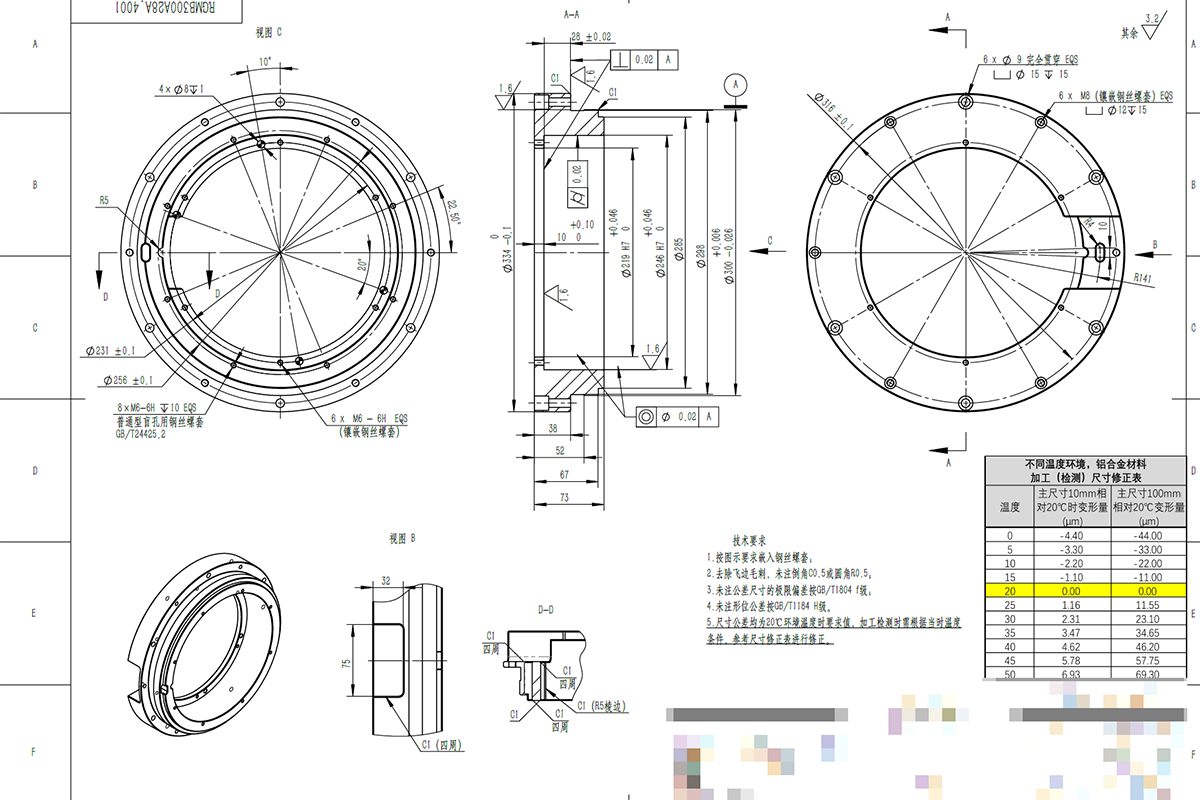
CNC prototyping plays an important role in modern mechanical product development. It allows engineers to turn digital designs into accurate physical parts before investing in tooling or mass production. By testing dimensions, materials, assembly relationships, and functional performance, companies can identify design problems earlier, control development costs, and make more reliable production decisions.
1. What Is CNC Prototyping Machining?
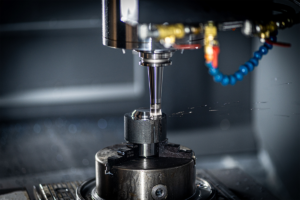
CNC prototyping is the process of manufacturing one or a small number of prototype parts from metal or plastic using computer numerical control equipment. Based on a three-dimensional CAD model, CNC machines remove material from a solid block until the required shape and dimensions are achieved.
Unlike visual models that only represent the appearance of a product, CNC prototypes can often be made from engineering materials similar to those used in final production. This makes prototype CNC machining suitable for dimensional inspection, assembly testing, mechanical testing, and design validation.
A professional rapid prototyping service can produce functional parts without requiring expensive molds. It is therefore commonly used during product development, engineering validation, design improvement, and low-volume trial production.
2. Why Is CNC Prototype Machining Important for Mechanical Design?
A mechanical design may appear complete on a computer screen but still create problems during manufacturing or assembly. CNC prototyping gives engineers an opportunity to verify whether the design performs as expected in real conditions.
A physical prototype can help check whether mounting holes, threads, locating surfaces, and mating features are correctly positioned. It can also reveal interference between components, insufficient clearance, difficult assembly, or unexpected movement.
Prototype parts can be used to evaluate strength, rigidity, weight, heat transfer, wear resistance, and surface condition. When a design problem is discovered before production, the CAD model can be modified without changing an expensive mold or scrapping a large batch of parts.
For procurement teams and decision-makers, CNC prototyping also provides more reliable information about machining cost, material availability, inspection requirements, and production lead time. This reduces uncertainty before the project moves to the next stage.
3. How Can a Prototyping Service Meet an Engineer’s Requirements?
A successful prototype must be manufactured according to its actual engineering purpose. Before machining begins, the supplier should understand which dimensions, surfaces, and features are critical to the function of the part.
Mechanical engineers should clearly identify assembly dimensions, positioning holes, sealing surfaces, bearing locations, threads, and other critical features. Tolerances should be applied according to functional requirements rather than using extremely tight tolerances throughout the entire drawing.
Special attention should be given to thin walls, deep cavities, narrow slots, small internal corners, long holes, and complex free-form surfaces. These features may increase tool vibration, deformation, machining time, and dimensional variation.
Datum selection is also important. The design, machining, and inspection datums should be clearly defined so that the supplier and customer evaluate the part using the same reference system.
Inspection methods should match the tolerance level. Basic dimensions may be measured with calipers or micrometers, while complex geometry, positional tolerances, and tight features may require optical inspection or coordinate measuring equipment.
4. How Is CNC Prototyping Performed?
The CNC prototyping process normally begins with a technical review. The supplier evaluates the part geometry, material, tolerances, quantity, and surface requirements to determine whether the design can be manufactured efficiently.
Customers should usually provide the following documents:
- A complete three-dimensional CAD model
- A two-dimensional engineering drawing
- Material specifications
- Dimensional and geometric tolerances
- Surface roughness requirements
- Thread and hole information
- Surface treatment instructions
- Required quantity and delivery date
- Inspection and reporting requirements
The 3D model defines the main geometry, while the 2D drawing communicates information that may not be fully represented in the model. The revision numbers of both files should remain consistent.
After the technical review, the supplier prepares the machining program, selects suitable tools, designs the workholding method, and determines the machining sequence. The part may then undergo rough machining, semi-finishing, finishing, deburring, surface treatment, inspection, and packaging.
5. Common Materials for CNC Prototypes
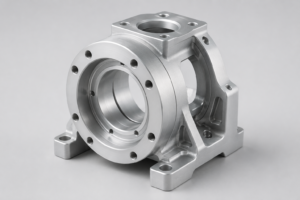
Aluminum is one of the most common CNC prototype materials because it is lightweight, easy to machine, and available in different grades. It is often used for housings, brackets, heat-management parts, and mechanical structures.
Stainless steel provides good strength, corrosion resistance, and durability. It is suitable for medical equipment, food-processing equipment, fluid-handling parts, and components used in demanding environments. However, it normally requires more machining time than aluminum.
Carbon steel and alloy steel are often selected for high-strength mechanical parts, shafts, fixtures, and wear-resistant components. Brass and copper may be used when electrical conductivity, thermal conductivity, or appearance is important.
Engineering plastics such as POM, ABS, nylon, polycarbonate, PEEK, and PTFE are used for lightweight components, insulating parts, guides, covers, and low-friction applications.
Material selection should consider not only the raw material price but also machinability, tool wear, availability, surface treatment, mechanical performance, and testing requirements.
6. What Factors Affect CNC Prototype Lead Time?
The complexity of the part is one of the main factors affecting delivery time. Parts that require multiple setups, five-axis machining, deep cavities, small tools, or complex surfaces generally need more programming and machining time.
Material availability can also influence the schedule. Common aluminum and plastic grades may be readily available, while special alloys, certified materials, or unusual dimensions may require additional purchasing time.
Tight tolerances and extensive inspection requirements increase both production and quality-control time. Surface treatments such as anodizing, plating, heat treatment, painting, or passivation may add several processing stages.
Order quantity, machine availability, design revisions, drawing problems, and communication delays can also affect the final lead time. Providing complete and accurate technical files at the beginning helps prevent unnecessary interruptions.
7. How Can a Design Be Optimized for CNC Prototyping?
Design optimization does not mean reducing product performance. It means removing unnecessary manufacturing difficulty while protecting critical functions.
Engineers can increase internal corner radii, avoid excessively deep pockets, use standard hole and thread sizes, reduce unnecessary machining orientations, and provide sufficient tool access. Thin walls should be designed with enough support to reduce vibration and deformation.
Tight tolerances should only be assigned to dimensions that influence fit, motion, sealing, alignment, or mechanical performance. Non-critical dimensions can often use standard CNC machining tolerances.
YILINGCNC can support customers by reviewing 3D models and engineering drawings before production. Its engineering team can help identify difficult features, unclear dimensions, unreasonable tolerances, datum problems, and potential machining risks. Based on the part’s application, the team can also provide suggestions about materials, manufacturing methods, inspection plans, and cost-saving design changes.
Early engineering communication can reduce misunderstanding, improve machining accuracy, shorten the revision cycle, and increase the possibility that the first prototype meets the engineer’s expectations.
8. Summary: What Is the CNC Prototyping Process?
A complete CNC prototyping project usually follows several stages: defining the purpose of the prototype, preparing CAD files and drawings, selecting the material, reviewing manufacturability, confirming the quotation, programming and machining, applying surface treatments, inspecting critical dimensions, and evaluating the finished part.
The prototype should then be tested for fit, assembly, movement, strength, and functional performance. Any problems should be recorded and traced back to the design, material, tolerance, machining process, or assembly method.
By combining clear engineering requirements, practical design decisions, professional drawing review, and controlled CNC machining, companies can reduce development risks and avoid unnecessary costs. CNC prototyping is therefore not only a manufacturing method but also an important decision-making tool connecting mechanical design with successful production.