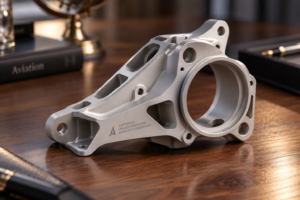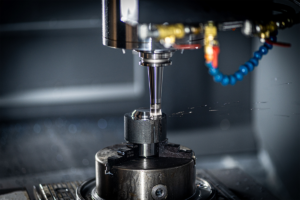
Nylon is one of the most widely used engineering plastics for mechanical and industrial parts. Also known as polyamide, or PA, it combines low weight, good strength, wear resistance, and relatively easy machining. These qualities make it suitable for gears, bushings, rollers, guide blocks, spacers, pulleys, and many other functional components.
For mechanical engineers, choosing the right nylon grade can improve part life and reduce weight. For purchasing teams, understanding the differences between PA6, PA66, PA12, cast nylon, and reinforced grades makes material selection and supplier communication easier.
This guide explains what nylon is, how the main grades differ, how nylon is CNC machined, where it is used, and what to consider before ordering custom nylon parts.
What Is Nylon?
Nylon is a family of thermoplastic materials called polyamides. It includes several grades designed for different mechanical, thermal, and environmental requirements.
In engineering applications, nylon is valued for its toughness, low friction, wear resistance, and strength while remaining much lighter than metal. It is available as rods, sheets, tubes, and blocks, making it suitable for CNC machining as well as molding.
The performance of a nylon part depends on the grade, part design, temperature, moisture, load, and machining method. For precision components, specifying only “nylon” on a drawing is often not enough.
Why Is Nylon Popular for Mechanical Parts?
Many mechanical parts need to slide, rotate, absorb impact, or operate repeatedly without adding unnecessary weight. Nylon performs well in these conditions and can be a cost-effective alternative to metal or more expensive engineering plastics.
Its low-friction surface is useful for gears, rollers, and bushings, while good wear resistance helps parts handle repeated contact. Nylon is also relatively easy to machine, allowing CNC milling and turning to create holes, slots, threads, and complex profiles without dedicated molds.
Key Properties of Nylon Material
Wear Resistance – Nylon resists abrasion and repeated surface contact, making it suitable for gears, wear pads, rollers, bushings, and guide components.
Low Friction – Its naturally low friction can reduce noise and wear between moving surfaces in suitable applications.
Strength and Toughness – Nylon offers a good strength-to-weight ratio and useful impact resistance. It is often selected when a part needs to be durable but lightweight.
Chemical Resistance – Many nylon grades perform well around oils, greases, fuels, and common industrial chemicals. Compatibility should still be checked for the exact grade and service environment.
Electrical Insulation – Because nylon is electrically insulating, it is commonly used for spacers, supports, connectors, and other electrical components.
Moisture Absorption – A key limitation is that nylon absorbs moisture from the environment. This can change dimensions and mechanical behavior, so humidity and inspection conditions matter for precision parts.
Common Types of Nylon for CNC Machining
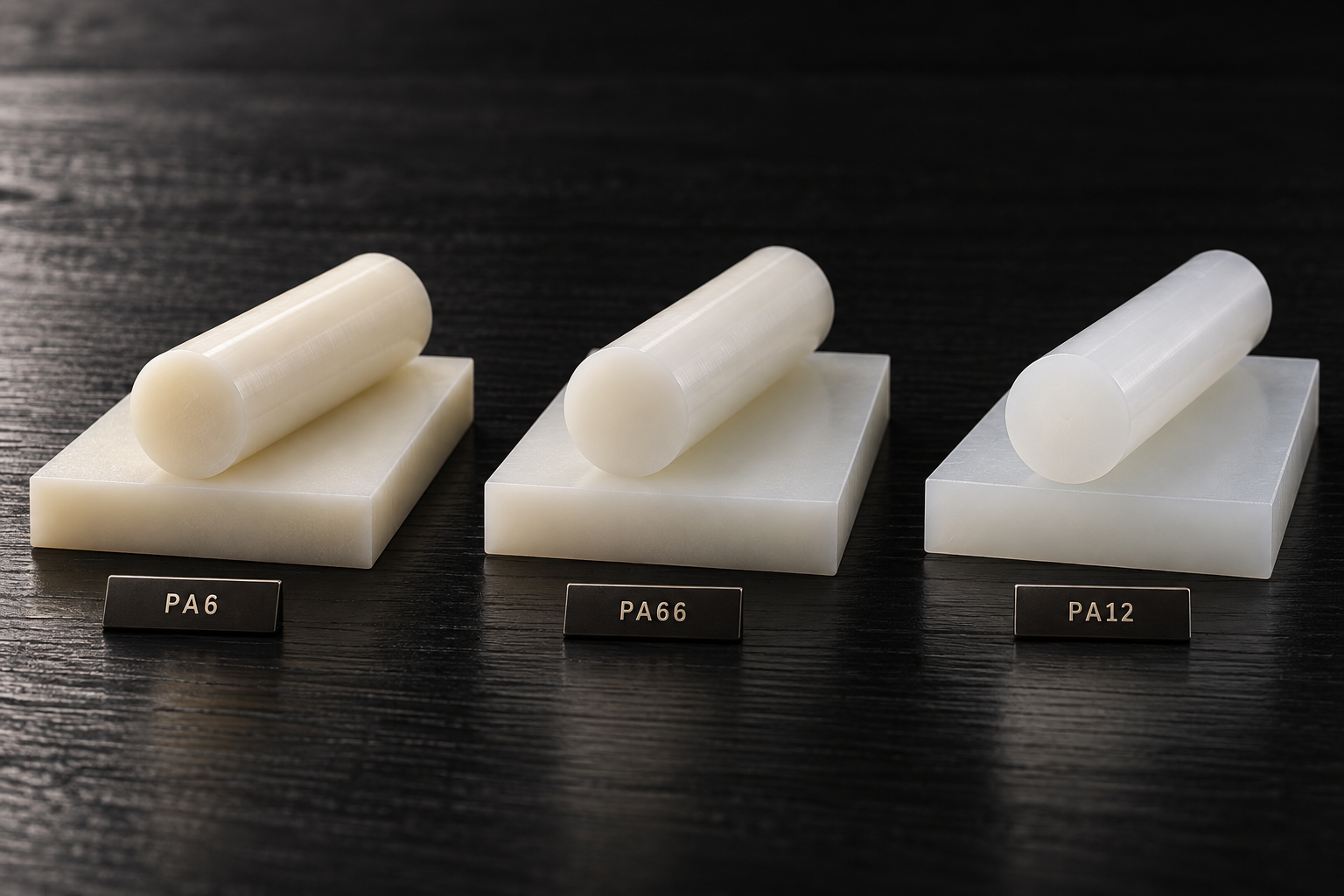
PA6 – General-Purpose Nylon – PA6, or Nylon 6, offers good toughness, wear resistance, and impact performance at a reasonable cost. Typical parts include gears, rollers, wear strips, guide blocks, spacers, and general machine components.
PA66 – Higher Strength and Stiffness – PA66, or Nylon 66, is often selected when higher stiffness, strength, or heat resistance is needed. It is commonly used for bushings, mechanical supports, bearing cages, spacers, and structural components. Like PA6, it absorbs moisture and may change dimensionally.
PA12 – Better Dimensional Stability – PA12 absorbs less moisture than many common nylon grades, which can make it a better choice for parts that need more stable dimensions in changing humidity. It is used for precision components, fluid-handling parts, connectors, and automotive components.
MC Nylon – Suitable for Larger Wear Parts – MC nylon, commonly known as cast nylon, is frequently used for larger components. It offers good wear resistance and low friction and is available in large stock sizes. Typical parts include large gears, pulleys, rollers, wheels, guide rails, and heavy-duty bushings.
Glass-Filled Nylon – Higher Stiffness – Glass-filled nylon contains glass fibers to improve stiffness, strength, and dimensional stability. It is useful for structural parts that need to resist bending. Because the fibers are abrasive, carbide tooling is commonly preferred.
PA6 vs PA66 vs PA12: Which Nylon Should You Choose?
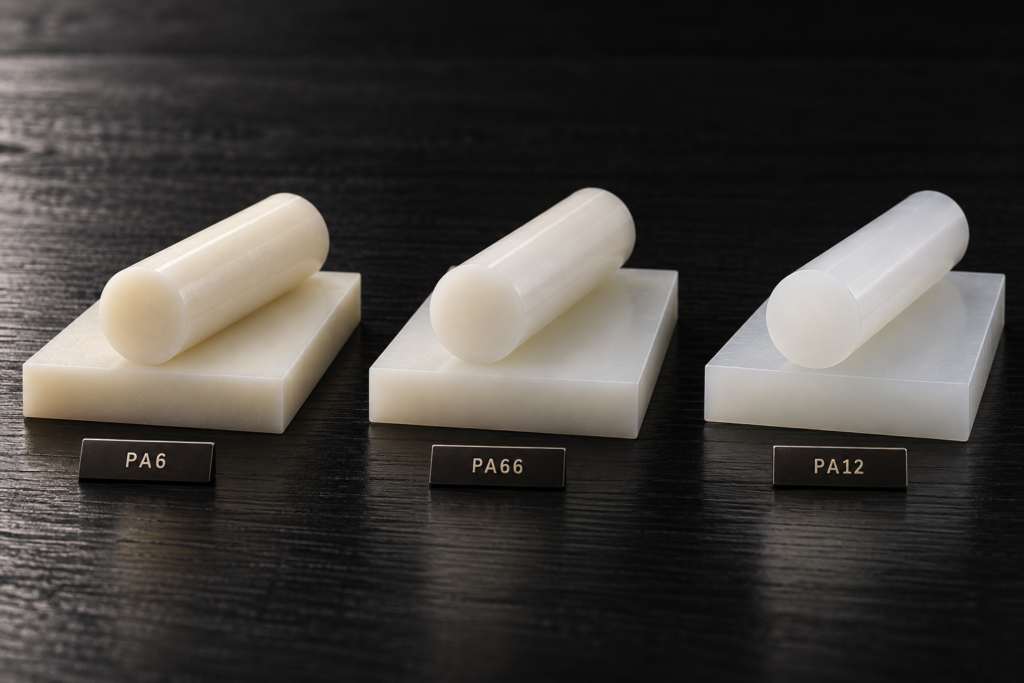
There is no single best nylon grade. PA6 is a practical option for general wear parts and machinery. PA66 is better suited to applications requiring greater stiffness or higher temperature performance. PA12 is often preferred when lower moisture absorption and dimensional stability are important.
Cast nylon is useful for larger wear parts, while glass-filled nylon is selected when stiffness and structural stability matter more than flexibility.
For critical components, material selection should consider temperature, humidity, load, friction, tolerance, chemical exposure, and service life rather than price alone.
How Is Nylon CNC Machined?
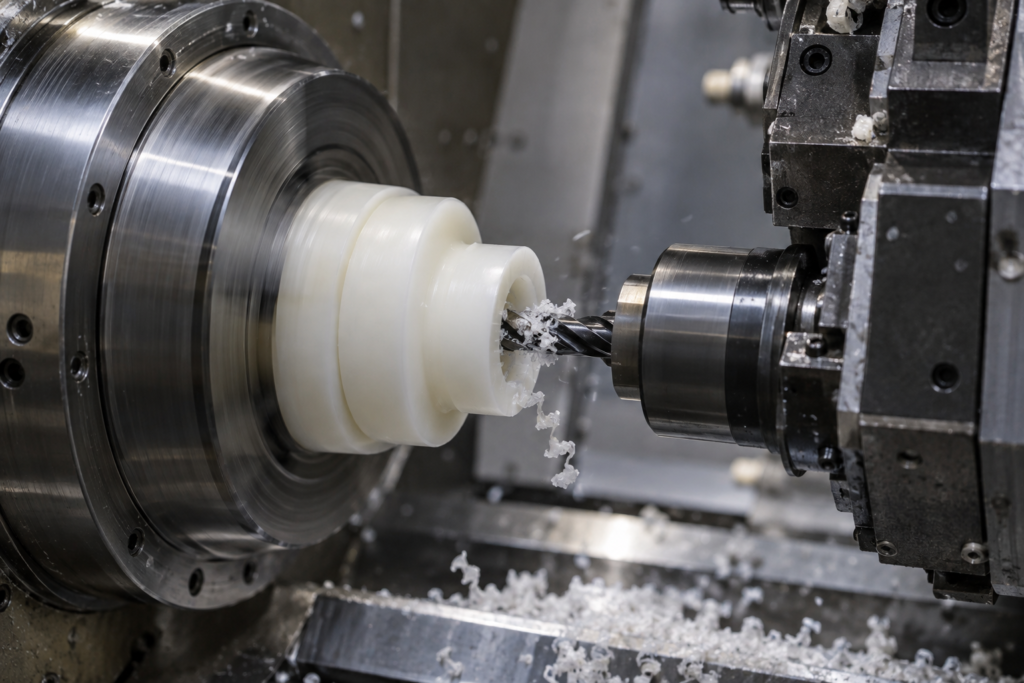
CNC machining is a practical way to produce custom nylon parts for prototypes, low- to medium-volume production, replacement parts, and precision components.
CNC Milling – CNC milling is used for plates, blocks, brackets, guides, housings, wear pads, and parts with pockets, slots, and holes. Because nylon can flex, workholding must support the part without excessive clamping force that could distort it.
CNC Turning – CNC turning is ideal for round parts such as bushings, rollers, spacers, sleeves, pulleys, and bearing-related components. Sharp tools help produce cleaner surfaces and reduce heat.
Drilling and Threading – Nylon can be drilled and threaded, but excessive friction should be avoided. Deep holes may require controlled drilling cycles and good chip removal. Threaded inserts can be considered where repeated fastening or higher thread strength is required.
Key Challenges When Machining Nylon
Heat Buildup – Too much cutting heat can soften nylon and affect surface finish or dimensions. Sharp tools, suitable cutting parameters, and effective chip removal help control heat.
Material Flexing – Thin walls, long features, and narrow sections can move under cutting forces. Proper support and lighter finishing cuts improve accuracy.
Burr Formation – Dull tools or unsuitable cutting conditions can leave burrs or stringy edges. Sharp tools and proper chip control improve edge quality.
Dimensional Change – Temperature and moisture can affect final dimensions. Tight-tolerance parts should be measured under controlled conditions, especially when the service environment differs from the machining environment.
Advantages and Limitations of Nylon
Nylon is lightweight, wear-resistant, low-friction, impact-resistant, and easy to machine. It can also reduce noise in moving assemblies and does not corrode like metal.
However, moisture absorption can affect dimensions, high cutting temperatures can cause deformation, and some grades are less suitable for very tight tolerances in changing environments. The material should always be matched to the real operating conditions.
Common Nylon Parts by Industry
Automotive – Typical nylon parts include gears, bushings, bearing cages, pulleys, spacers, clips, and guides. Depending on the grade, nylon can also be used around oils, fuels, vibration, and moderate heat.
Industrial Machinery – Common parts include rollers, sprockets, guide blocks, wear pads, bushings, pulleys, wheels, and sliding components. Low friction and wear resistance make nylon useful in conveyors and moving equipment.
Robotics and Automation – Nylon is used for gripper components, guide blocks, rollers, gears, pulleys, spacers, cable guides, and lightweight moving parts.
Electronics and Electrical Equipment – Typical parts include insulating spacers, supports, connector components, housings, cable guides, and fasteners.
Food and Packaging Equipment – In suitable approved grades, nylon may be used for rollers, guide rails, sprockets, star wheels, bushings, and wear components. Material compliance should be confirmed for food-contact applications.
Medical Equipment – Nylon can be used for housings, guides, rollers, spacers, fixtures, and non-implant mechanical components. The exact grade should be verified against cleaning, sterilization, and regulatory requirements.
Aerospace – For suitable non-critical applications, nylon may be used for lightweight spacers, cable guides, bushings, brackets, clips, and protective components.
Nylon vs Other Engineering Plastics
Nylon vs POM (Delrin) – Both are popular for mechanical parts. Nylon is often chosen for toughness, wear resistance, and impact performance, while POM is commonly preferred when low moisture absorption and dimensional stability are higher priorities.
Nylon vs PTFE – PTFE offers very low friction and strong chemical resistance but is softer and less rigid. Nylon is generally better when greater mechanical strength is required.
Nylon vs PEEK – PEEK performs better at high temperatures and in demanding environments, but it is much more expensive. Nylon is often the more economical option when extreme performance is unnecessary.
How to Choose the Right Nylon for Your Part
Start with the part’s actual working conditions. Consider the load, temperature, humidity, wear, friction, chemical exposure, required tolerance, electrical requirements, quantity, and target cost.
For a simple wear pad or roller, PA6 or cast nylon may be enough. For a precision part in a humid environment, PA12 or another low-moisture material may be better. For a stiff structural component, glass-filled nylon may be more suitable.
What to Provide When Requesting a Nylon CNC Quote
A clear RFQ helps a machining supplier recommend the correct process and reduce unnecessary communication.
Provide a 2D drawing and, if available, a 3D CAD model. Specify the nylon grade instead of writing only “nylon.” Include critical tolerances, quantities, surface requirements, threads, inspection requirements, and any special documentation.
It is also useful to describe the working environment. Information about load, temperature, humidity, sliding contact, chemicals, or assembly conditions can help identify material or tolerance risks before production.
Frequently Asked Questions About Nylon
Is Nylon Easy to Machine? – Yes. Nylon is generally easy to CNC machine with sharp tools and suitable cutting conditions. Heat, flexibility, and burr control are the main concerns.
Which Nylon Is Best for CNC Machining? – It depends on the application. PA6 is a common general-purpose choice, PA66 offers higher stiffness, PA12 provides better moisture resistance and dimensional stability, and cast nylon works well for larger wear parts.
Does Nylon Absorb Water? – Yes. Many nylon grades absorb moisture, which can affect size and mechanical behavior. PA12 generally absorbs less moisture than PA6 and PA66.
Can Nylon Replace Metal? – In some applications, yes. Nylon can replace metal in gears, rollers, bushings, spacers, guides, and other components when load and temperature requirements are suitable.
Can Nylon Hold Tight Tolerances? – Nylon can be machined accurately, but moisture, temperature, geometry, and material flexibility must be considered. For very tight tolerances, operating and inspection conditions should be discussed with the machining supplier.
Conclusion: Choosing Nylon for Your Next CNC Project
Nylon is a practical engineering plastic for parts that need wear resistance, low friction, toughness, and low weight. PA6, PA66, PA12, cast nylon, and glass-filled nylon each serve different needs, so the right grade depends on the real working environment.
For engineers, the key factors are load, temperature, moisture, friction, and tolerance. For buyers, clearly specifying the grade, drawings, quantity, and inspection requirements helps suppliers quote accurately and manufacture the right part.
When these factors are considered early, CNC-machined nylon can provide a durable and cost-effective solution for machinery, automotive, robotics, electronics, packaging equipment, and many other industrial applications.