Broaching is a precision machining process used to create internal and external features such as keyways, splines, slots, and non-circular holes. Unlike conventional CNC milling or turning, broaching uses a specially designed cutting tool to progressively remove material and produce accurate profiles, often in a single pass.
This machining method is widely applied in automotive manufacturing, aerospace, industrial machinery, and precision equipment production, where dimensional consistency and efficient machining are important.
But what is broaching in machining, how does the process work, and how does it compare with CNC milling and CNC turning? This article explains the meaning of broaching, its working process, different types, advantages and disadvantages, and common industry applications.
1. What Is Broaching in Machining?
Broaching is a subtractive manufacturing process that removes material from a workpiece using a cutting tool known as a broach. In conventional broaching, the tool contains multiple cutting teeth arranged in progressively increasing sizes. As the tool moves through or across the workpiece, each tooth removes a thin layer of material until the desired shape is formed.
Broaching is particularly effective for producing accurate internal and external profiles with consistent dimensions. It is commonly used to manufacture keyways, splines, square holes, hexagonal holes, grooves, and other specialized features.
What Does Broaching Mean?
In mechanical manufacturing, broaching refers to a machining operation in which a specially designed cutting tool removes material to create a specific shape or profile. The term broach refers to the cutting tool itself, while broaching describes the machining process.
For example, when manufacturing a steel gear hub, broaching can be used to produce an internal keyway that allows the hub to connect securely to a shaft. Compared with general-purpose CNC machining methods, broaching is particularly suitable for producing the same profile repeatedly, especially in medium- and high-volume production. However, because conventional broaches are usually designed for specific geometries, this method may offer less flexibility when part designs frequently change.
2. How Does Broaching Work?
The broaching process works by moving a cutting tool through or across a workpiece under controlled cutting force. In conventional linear broaching, the cutting teeth are arranged so that each successive tooth removes a small additional amount of material. This gradual cutting action allows the final profile to be produced efficiently. The typical broaching process consists of the following steps.
Step 1: Workpiece Preparation
The first step is to prepare the workpiece according to the required dimensions and material specifications. For internal broaching, a starting hole is typically produced using drilling, boring, or another machining operation. The hole provides access for the broaching tool. For external broaching, the workpiece must have an accessible surface that can be machined by the cutting tool. Material hardness, machining allowance, and workpiece geometry should be evaluated before beginning the process.
Step 2: Broaching Tool Selection and Setup
The appropriate broaching tool is selected based on the required profile, material, and machining conditions. A conventional broach generally consists of three cutting sections:
- Roughing teeth: Remove most of the excess material.
- Semi-finishing teeth: Gradually refine the machined profile.
- Finishing teeth: Produce the final dimensions and surface finish.
The workpiece is securely clamped, and the broach is aligned with the intended cutting path. Proper alignment and fixture stability are essential for maintaining dimensional accuracy.
Step 3: Material Removal
During the cutting operation, the broaching machine moves the cutting tool through or across the workpiece. Each tooth removes a small amount of material, and the progressively increasing tooth height gradually forms the desired profile. Depending on the broaching method, the tool may be pulled or pushed through the material. Cutting fluids may be used to reduce friction, control temperature, and assist with chip evacuation.
Step 4: Profile Formation and Finishing
As the final cutting teeth pass through the workpiece, the required geometry is completed. For example, when producing an internal spline, the broach forms a series of precisely shaped grooves that allow the component to engage with a corresponding splined shaft. Conventional broaching can often complete the required feature in a single cutting stroke. Depending on the application, additional deburring or finishing operations may be necessary.
Step 5: Quality Inspection
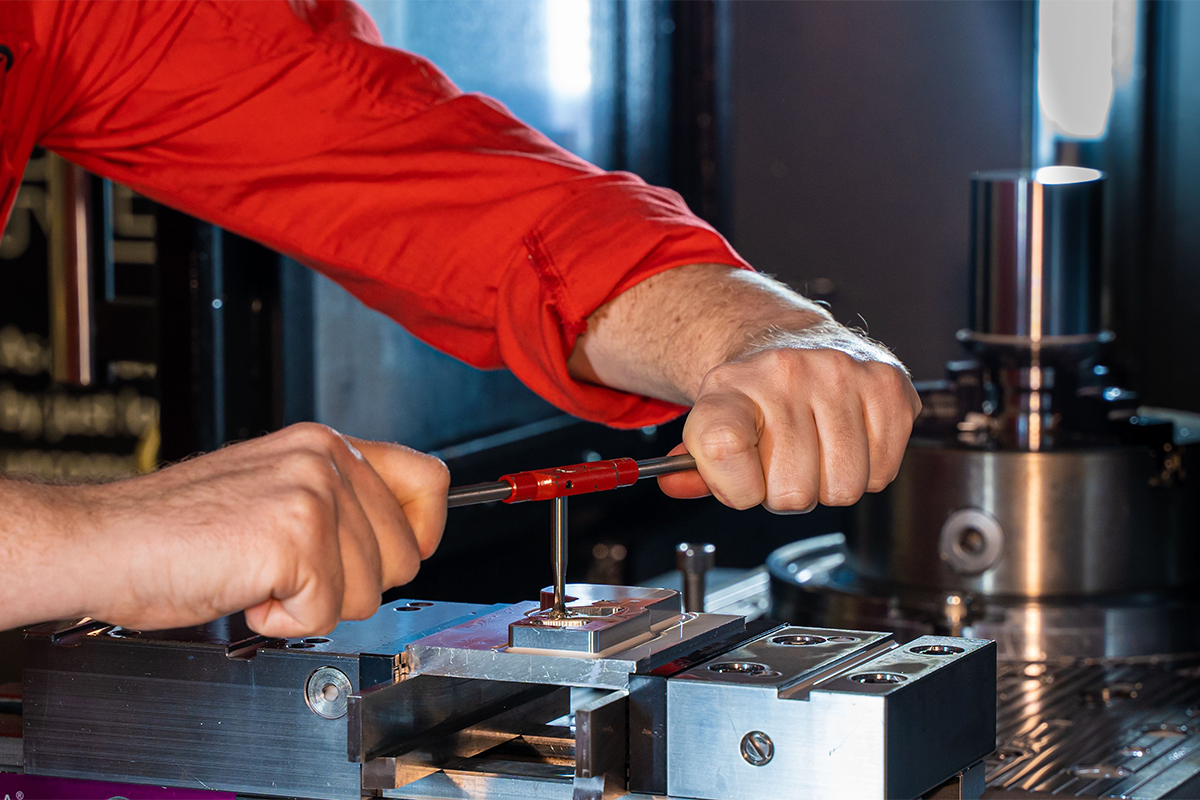
After machining, the finished part is inspected to verify its dimensions, geometry, and surface quality. Common inspection methods include coordinate measuring machines (CMMs), spline gauges, keyway gauges, go/no-go gauges, and surface roughness measurement instruments. Inspection helps ensure the broached feature meets the required engineering specifications and fits correctly with mating components.
3. What Are the Different Types of Broaching?
Broaching can be classified according to the location of the machined feature, cutting tool movement, and machining method. The following are the most common types of broaching used in precision manufacturing.
Internal Broaching
Internal broaching removes material from the inside of an existing hole to create a specific internal profile. It is frequently used for manufacturing internal splines, keyways, square holes, hexagonal profiles, and other non-circular features. For example, automotive transmission hubs may require internal splines that connect with transmission shafts. Internal broaching allows these features to be produced consistently during repetitive manufacturing operations.
External Broaching
External broaching machines exposed surfaces of a workpiece to create precise external profiles. Unlike internal broaching, the cutting tool removes material from the outside of the component rather than passing through an internal opening. It is commonly used to produce flats, grooves, serrations, and specially shaped exterior features. External broaching is particularly useful for manufacturing large quantities of components with identical surface profiles.
Pull Broaching
Pull broaching uses a machine to pull the cutting tool through or across a workpiece. The broach operates under tension, allowing relatively long tools with multiple cutting teeth to be used. This method is frequently employed for producing internal splines and keyways, especially when high production efficiency and dimensional consistency are required.
Push Broaching
Push broaching forces the cutting tool into or through the workpiece. Unlike pull broaching, the tool operates under compression, which can limit its length because of the risk of buckling. Push broaching is generally suitable for shorter features and smaller components, including certain keyways and internal profiles.
Rotary Broaching
Rotary broaching, also known as wobble broaching, is a specialized method for creating non-circular holes and profiles. It uses a cutting tool mounted at a slight angle relative to the workpiece axis. The resulting wobbling action progressively forms the required shape. Rotary broaching can be performed on compatible CNC lathes, machining centers, and other machine tools. This method is commonly used to manufacture hexagonal sockets, square holes, precision fasteners, and small mechanical connectors. It is especially useful when non-circular features need to be integrated into an existing CNC machining process.
4. Broaching vs. CNC Milling vs. CNC Turning
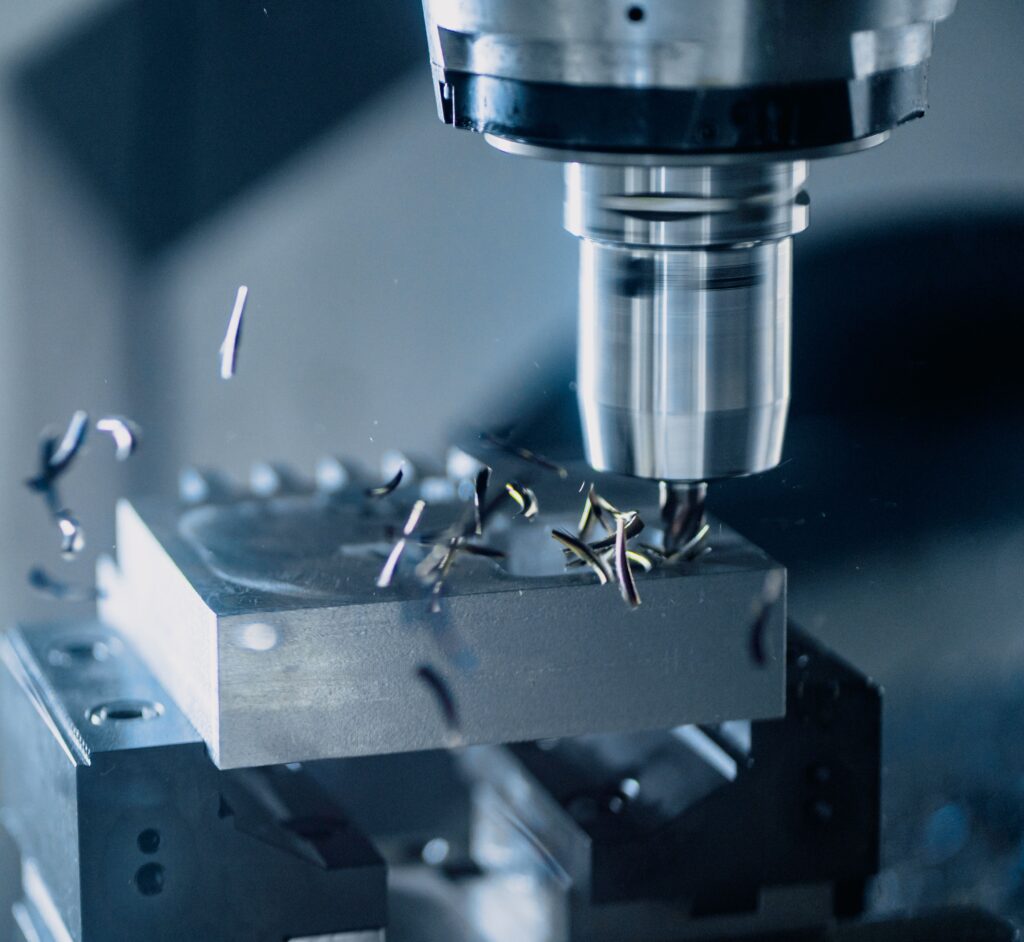
Broaching, CNC milling, and CNC turning are three important subtractive machining processes. Although all three remove material to create precise components, they differ significantly in cutting methods, machining capabilities, flexibility, production efficiency, and cost. Broaching is mainly used for producing accurate and repeatable profiles, CNC milling is suitable for complex geometries and custom features, while CNC turning is primarily designed for cylindrical and rotational components.
| Comparison | Broaching | CNC Milling | CNC Turning |
| Machining principle | Progressive profile cutting with a broach | Rotating cutting tools remove stock | Workpiece rotates against a cutting tool |
| Typical features | Keyways, splines, slots, shaped holes | Pockets, slots, contours, holes, complex surfaces | Shafts, bushings, cylindrical surfaces, threads |
| Suitable geometry | Specific internal and external profiles | Complex 2D and 3D geometry | Primarily rotational geometry |
| Machining accuracy | High repeatability with suitable tooling | High with suitable equipment and setup | High for cylindrical features |
| Production efficiency | Very efficient for repeated profiles | Efficient for flexible, complex machining | Highly efficient for rotational parts |
| Tooling | Often needs profile-specific broaches | Standard and specialized cutters | Standard and specialized turning tools |
| Tooling cost | Potentially high for custom broaches | Generally moderate with standard tooling | Generally moderate with standard tooling |
| Production volume | Especially medium to high volume | Prototypes through high volume | Prototypes through high volume |
| Advantages | Short cycles; repeatable profiles; good surface finish; often one stroke | Highly flexible; complex geometry; easy program changes; practical for low volume | Fast cylindrical machining; good concentricity; efficient shaft and bushing production |
| Disadvantages | High custom tooling cost; limited flexibility; geometric/access restrictions | Some profiles need multiple passes; time-consuming complex features; cutter-access limits | Conventional turning cannot make many non-rotational internal features; limited prismatic geometry |
| Common applications | Gear hubs, splines, keyways, couplings | Housings, brackets, molds, complex parts | Shafts, pins, sleeves, bushings, threads |
Which Machining Process Is Best for Your Parts?
Choosing between broaching, CNC milling, and CNC turning depends on part geometry, material, tolerance requirements, production quantity, and manufacturing cost. Broaching is generally advantageous when the same profile must be produced repeatedly in large quantities. CNC milling is often preferred for components with complex geometries or frequently changing designs, while CNC turning is usually the most efficient choice for cylindrical components such as shafts, sleeves, and bushings.
In many manufacturing applications, these processes are combined. For example, a mechanical coupling may first undergo CNC turning to produce its outer diameter and internal bore. A subsequent broaching operation can then create the internal keyway or spline required for torque transmission.
5. Which Industries Use Broaching Machining, and What Materials Are Common
Broaching is used in industries that require precision profiles, reliable mechanical connections, and repeatable production quality. Material selection depends on strength, hardness, wear and corrosion resistance, and service conditions. The table below gives representative applications.
| Industry | Components / Parts | Common Materials |
| Automotive | Transmission gear hubs; clutch hubs; internal splines; drive gear keyways; shaft couplings | AISI 4140; AISI 8620; AISI 1045; cast iron |
| Aerospace | Turbine disk attachment slots; spline couplings; actuator drives; precision fittings | Ti-6Al-4V; Inconel 718; 17-4 PH stainless; alloy steels |
| Industrial Machinery | Gearbox hubs; pulley keyways; shaft couplings; sprockets; drive connectors | AISI 1045; AISI 4140; cast iron; stainless steel |
| Medical Devices | Surgical drive sockets; orthopedic instrument connectors; precision couplings; specialized fasteners | 316L stainless; 17-4 PH stainless; titanium alloys |
| Electronics & Semiconductor Equipment | Precision shaft couplings; motor drive connectors; adjustment mechanisms; small hex sockets | Aluminum 6061/7075; stainless 304/316; brass |
| Energy & Heavy Equipment | Pump couplings; compressor shaft connections; transmission hubs; heavy gear connections | AISI 4140; AISI 4340; stainless steel |
| Hydraulic & Pneumatic Equipment | Hydraulic pump drives; shaft couplings; keyed sleeves; valve actuation connectors | Carbon steel; alloy steel; stainless steel; brass |
| Precision Instruments & Automation | Internal hex sockets; adjustment screws; miniature couplings; drive interfaces | Stainless 303/304; aluminum alloys; brass |
Note: These are representative combinations. Actual suitability depends on material condition, hardness, feature geometry, tolerances, and machine and tooling capabilities.
Why Is Broaching Used Across These Industries?
One of the main reasons manufacturers use broaching is its ability to produce complex engagement profiles with consistent dimensions. Internal splines in automotive transmission components must engage correctly with mating shafts to transmit torque. Precision couplings in industrial machinery similarly depend on reliable fit and alignment.
Material selection is also important. Carbon and alloy steels are commonly chosen for strength and wear resistance; stainless steels for corrosion resistance; aluminum for lightweight components; and titanium or nickel-based alloys for demanding aerospace applications. Harder or difficult-to-machine materials can increase cutting forces, tool wear, and costs, so both material properties and part geometry should be reviewed before selecting broaching or another machining process.
6. Frequently Asked Questions About Broaching Machining
What Is Broaching Used for in Machining?
Broaching produces precise internal and external features including keyways, splines, grooves, serrations, and non-circular holes. It is especially suitable for repetitive production with consistent profile dimensions.
What Is the Difference Between Broaching and CNC Milling?
Broaching uses a profile-cutting tool, often completing the shape in one stroke. CNC milling uses rotating cutters following programmed paths. Broaching is efficient for repeated profiles; milling offers more flexibility for custom parts.
Can Broaching Be Done on a CNC Machine?
Yes. Compatible CNC lathes and machining centers may use rotary or linear broaching attachments. Suitability depends on machine rigidity, control capabilities, tooling, and access.
What Materials Are Suitable for Broaching?
Common materials include carbon steel, alloy steel, stainless steel, aluminum, brass, and selected titanium and nickel alloys. Machinability depends on hardness, strength, geometry, and cutting conditions.
What Are the Main Advantages of Broaching?
Advantages include short cycles for repeated profiles, dimensional consistency, good surface quality, and the ability to make features that can be difficult with conventional methods.
What Are the Limitations of Broaching?
Custom tooling can be costly, and profile-specific tools limit design flexibility. Some blind features, access constraints, and complex geometries may not be suitable.
Is Broaching Suitable for Low-Volume Production?
It can be, especially with standard tools or compatible CNC attachments, but custom broaches often make CNC milling or other methods more economical for small batches.
Conclusion
Broaching is an efficient precision machining process for making keyways, splines, slots, and specialized internal or external profiles. Its repeatability makes it valuable in automotive, aerospace, industrial machinery, and other engineering applications. The best process still depends on geometry, material, tolerances, production volume, and tooling costs. Broaching often suits high-volume profile machining, while CNC milling and turning offer flexible alternatives for custom parts.
Yiling CNC specializes in custom precision CNC-machined metal parts. If your project involves keyways, splines, or other challenging mechanical features, share your 2D drawings or 3D models with our engineering team for a manufacturability evaluation and quotation.